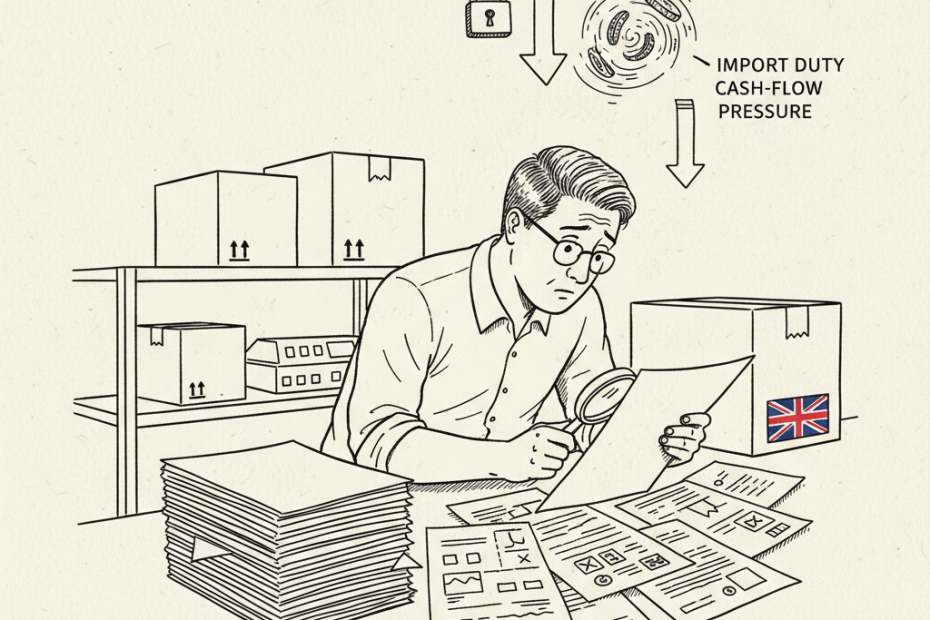
UK importers have just had a timely reminder that tariff costs are not a “set and forget” part of doing business. The government has closed its latest objections window for proposed new duty suspensions, while also reviewing whether a number of existing suspensions due to expire in 2026 should be extended.
For many small firms this will sound technical, but the practical point is simple. If your business imports components, ingredients, packaging, raw materials or specialist goods, a duty suspension can reduce or remove import duty on specific products for a limited period. That can make a real difference to landed costs, cash flow and pricing decisions, especially for manufacturers, food businesses, wholesalers and firms with tight margins.
What has changed
GOV.UK’s updated guidance says duty suspensions and autonomous tariff quotas are designed to help UK and Crown Dependency businesses remain competitive by lowering import duty on selected goods, normally those used in production. Duty suspensions allow unlimited quantities of eligible goods to be imported at a reduced tariff rate while the measure is in force. Autonomous tariff quotas allow a limited quantity to come in at a lower rate.
The most recent application window for new duty suspensions ran from 26 November 2025 to 4 February 2026. The government then ran a four-week objections window from 27 March to 24 April 2026, giving the wider public a chance to raise concerns about proposed new suspensions. Ministers are now considering the evidence before confirming outcomes.
At the same time, the government is reviewing views on suspensions due to expire in 2026, including whether some should be extended until 31 December 2028. That matters because a suspension that quietly expires can feed straight through into higher import costs.
Why small businesses should care
Tariff relief is easy to miss because it often sits inside customs admin rather than day-to-day sales or marketing. But for a small business importing regular inputs, even a modest duty change can alter the true cost of a product line.
A manufacturer importing specialist parts may find a suspension helps keep UK production viable. A food or drink business using imported ingredients may need to know whether an autonomous quota is available and whether volumes could run out. A wholesaler may need to check whether a product is still covered by a temporary measure before quoting customers for the next quarter.
It is also a cash-flow issue. Import duty is usually felt before the customer has paid, so unexpected costs can add to the same working-capital pressure that many SMEs already face from slow payment cycles. We have previously covered how late payments continue to squeeze UK SMEs; import costs can create a similar strain if they are not built into forecasts early enough.
What to check now
The first step is to identify the commodity codes used for goods you import regularly. Then check the UK Trade Tariff lookup tool and the government’s tariff suspension reference documents to see whether any current suspension or quota applies, and when it expires.
Businesses should also make sure their freight forwarder, customs agent or internal finance team is not relying on old assumptions. If more than one tariff concession might apply, GOV.UK notes that importers will want to make sure goods are entered at the most advantageous rate. That is worth checking rather than assuming the default duty rate is inevitable.
For SMEs selling on fixed-price contracts, this is also a prompt to review quotes, renewal dates and margin assumptions. A tariff saving may create room to protect prices or invest elsewhere. A lost suspension could mean costs need to be passed on, absorbed, or negotiated with suppliers.
The practical takeaway
This is not a call for every small business to become a customs specialist. It is a reminder that tariff relief can be valuable, temporary and easy to overlook.
If imports are a material part of your cost base, use the government’s latest update as a trigger to check your commodity codes, confirm whether any duty suspensions or quotas apply, and note the expiry dates. For firms already dealing with pressure from fuel, inflation and weaker demand, a tariff check is one of the more practical bits of financial housekeeping available right now.
Sources
- GOV.UK, UK Trade Tariff: duty suspensions and autonomous tariff quotas, updated 24 April 2026
- GOV.UK, Trade Tariff lookup tool