
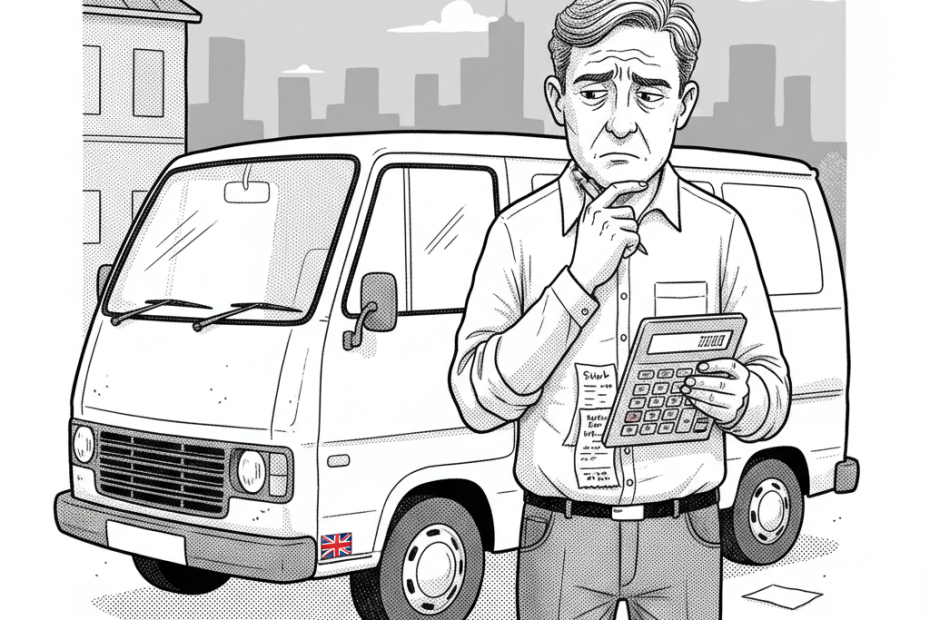
The latest fuel monitoring update from the Competition and Markets Authority is a useful signal for any UK small business that depends on vans, deliveries, field work or regular travel. The headline is reassuring in one sense: the watchdog says it has not found evidence of widespread fuel price-gouging in its latest market review. But the practical message for SMEs is still to keep a close eye on fuel costs, because even a fairly functioning market can leave smaller operators exposed when oil prices, exchange rates and pump prices move quickly.
The CMA published its latest road fuel monitoring report on 1 May 2026. It said retailer margins were broadly unchanged between February and March, and that the rapid increase in fuel prices linked to the Middle East crisis was driven mainly by wider cost pressures, especially higher oil prices, rather than a general rise in retailer margins. The update comes against a wider backdrop of volatile energy markets, with many small firms already watching vehicle, delivery and supplier costs closely.
What the CMA found
The CMA’s monitoring work follows earlier concern about weak competition in parts of the road fuel market. Its latest update does not point to a sudden, widespread margin grab by retailers. Instead, the watchdog said average retailer fuel margins remained broadly stable over the month covered by the report, although it also said margins remain above historic levels and local price differences are still high.
That distinction matters. If pump prices are rising, it does not automatically mean the local filling station is making unusually large profits. Prices can be affected by crude oil, refining costs, wholesale markets, currency movements, tax and local competition. For small firms trying to understand their own cost base, the useful question is not only “are prices fair?” but “how exposed is my business if prices stay higher for longer?”
The CMA’s continued monitoring should still be welcomed by smaller firms. Transparent fuel markets help sole traders, tradespeople, couriers, retailers and hospitality businesses plan with more confidence. But watchdog scrutiny does not remove the need for active cost control at business level.
Why this matters to SMEs
Fuel is not just a line on a receipt. For many SMEs it is tied directly to service delivery. A plumber’s call-out pricing, a mobile hairdresser’s diary, a rural shop’s stock runs, a catering firm’s event travel or a small manufacturer’s local deliveries can all be affected by pump prices.
The challenge is that small businesses often have less room to absorb sudden increases than larger fleets. A big operator may have fuel cards, route optimisation software, longer-term contracts and purchasing power. A smaller firm may be using a few vans, staff cars or reimbursed mileage, with prices reviewed only when margins already feel tight.
There is also a cash-flow angle. If fuel costs rise before customer prices, delivery fees or contract terms are updated, the business carries the squeeze. That is why fuel volatility links closely to wider working-capital discipline. Our recent piece on late payments and SME cash flow looked at how quickly pressure builds when money comes in slowly while costs keep moving.
What small firms should check now
First, check whether fuel is being tracked as a business cost or simply accepted as unavoidable overhead. Even a basic monthly review of mileage, litres bought, average price paid and jobs completed can show whether certain routes, customers or service areas are becoming less profitable. The CMA also encouraged drivers to shop around where practical, saying local price variation can make a meaningful difference to a full tank.
Second, review customer pricing where travel is significant. That does not always mean an immediate price rise, but SMEs should know which jobs rely on old mileage assumptions. If a quote template, call-out fee or delivery charge has not been updated for months, it may be hiding a margin problem.
Third, tighten route planning. Combining journeys, setting clearer delivery days, reducing unnecessary return trips and checking whether staff can collect materials more efficiently can all help. These are not glamorous changes, but they can be easier to implement than renegotiating every contract.
Fourth, keep evidence. If you need to explain a price increase to customers, a supplier, or a larger client, it helps to show a clear pattern rather than a vague complaint about costs. Fuel receipts, mileage logs and simple monthly comparisons can support a calm commercial conversation.
Finally, remember that fuel sits inside a broader cost picture. Firms already watching delivery, energy and travel expenses may also find our earlier article on fuel duty uncertainty and SME running costs useful.
The practical takeaway
The CMA’s latest report does not suggest a market-wide gouging problem in the period it reviewed. That is good news. But for SMEs, “no widespread gouging” is not the same as “no cost pressure”.
Small firms with vans, mobile staff, deliveries or regular business travel should use the update as a prompt to tighten their own numbers: track fuel properly, revisit travel-related pricing, plan routes more deliberately and keep evidence of cost movement. In a volatile market, the businesses that notice margin pressure early are usually in a better position than those that wait until the bank balance shows it.
Sources
- Competition and Markets Authority, CMA publishes latest monitoring report on road fuel market, published 1 May 2026
- BBC Business, No evidence of widespread fuel price-gouging, watchdog says, published 1 May 2026


