
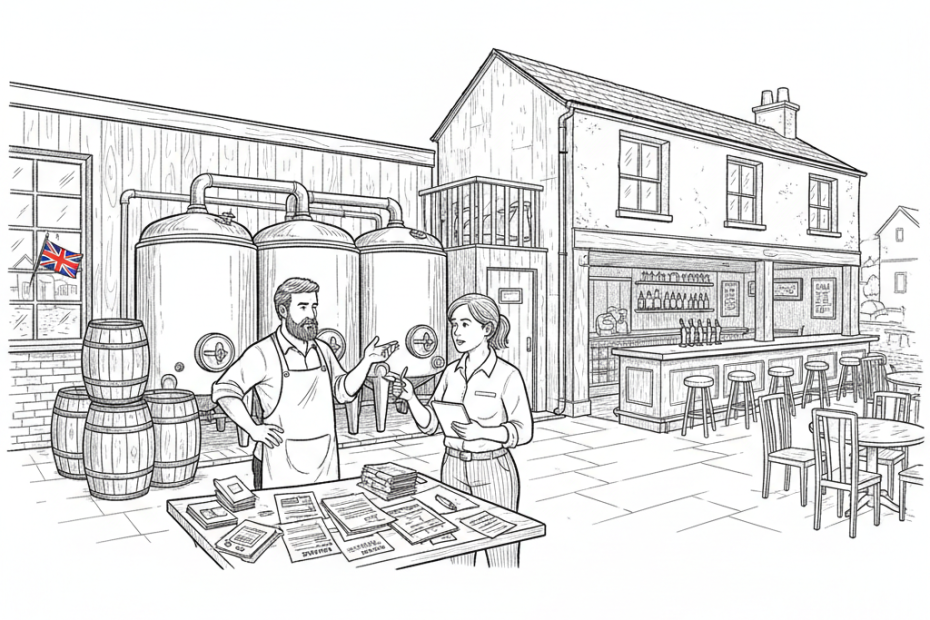
The UK’s brewery scene is shrinking after a wave of closures, adding another warning sign for independent brewers, pubs, taprooms and small hospitality suppliers.
BBC analysis of Companies House data reported that 320 beer-brewing businesses closed last year while 170 opened, leaving a net loss of 150. By April, the number of UK beer brewing companies had fallen to 2,320, down from a peak of 2,594 in 2022.
What is changing
The headline issue is not simply that some breweries are closing. It is that the market has shifted after years of growth. Independent brewing expanded quickly in the craft-beer boom, but the current trading environment is exposing businesses that rely on narrow margins, difficult routes to market, and customers who are more cautious about discretionary spending.
The BBC report pointed to several linked pressures: pub closures, rising costs, changing drinking habits, taxation, access to draught lines, and supermarket pricing power. For small firms, that combination matters because it affects both demand and distribution.
A brewery can make a good product and still struggle if it cannot get reliable access to pubs, if a taproom becomes essential rather than optional, or if customers resist the price increases needed to cover fuel, rates, labour, ingredients and energy.
Why small hospitality firms should care
This is not only a brewery story. Independent pubs, local bars, bottle shops, food businesses, event organisers and tourism operators can all be affected when local producers contract.
For pubs and bars, fewer local breweries may mean less choice, weaker supplier diversity, and less room to differentiate on local products. For small brewers, fewer open routes into pubs can push more pressure onto direct sales, taprooms, events and online orders.
That can be a strength if the business has a loyal local audience, but it also creates concentration risk. If a taproom is carrying the whole business, a quiet period, staffing problem, weather shock or local disruption can hit cash flow quickly.
BritishSME has recently covered how staff juggling multiple jobs can affect small employers. Hospitality and brewing firms may feel that in practical ways, from rota reliability to recruitment, especially where evening and weekend work is central.
Rates relief may help some pubs
The government has announced pubs and live music venues relief for 2026-27. GOV.UK says eligible pubs and live music venues will receive 15% business rates relief in 2026-27, on top of any transitional relief or Supporting Small Business Relief they qualify for.
That support is relevant for pub operators, but it does not solve the wider brewing market on its own. Not every brewery has an eligible pub premises, and not every route-to-market problem is a rates problem. Small firms should treat relief as one part of the cost picture rather than a full answer.
Eligibility also matters. GOV.UK’s pub definition includes being open to the general public, allowing free entry except for occasional entertainment, allowing drinking without requiring food, and permitting drinks to be bought at a bar. Businesses with mixed models should check the details carefully rather than assuming they qualify.
What small firms should review
The first check is route to market. Breweries should know how much revenue depends on tied pub access, independent pub sales, taproom footfall, wholesale, events, subscriptions, online orders or supermarket listings. If one route is weakening, the business needs to know early.
The second check is product mix. BBC reporting suggested parts of the beer market are still holding up, including heritage, craft and more distinctive beers, while more mainstream volume products have been under pressure for longer. That does not mean every brewer should chase novelty, but it does mean understanding where demand is still resilient.
The third check is pricing. If customers resist higher pint prices, firms need a clear view of which products, pack sizes, events or food pairings still make margin. Absorbing every cost increase can look customer-friendly until it quietly removes profit from the business.
Finally, operators should review cash flow. Brewing and hospitality both involve upfront stock, staff, energy and premises costs. Where sales are seasonal or taproom-led, the timing of cash coming in can matter as much as the annual sales total.
The practical takeaway
The fall in UK brewery numbers is a sign of a maturing and more difficult market, not proof that independent beer has lost its audience. But it does show that small hospitality firms need to be sharper about access, costs, product mix and direct customer relationships.
For independent brewers and pub-facing firms, the useful question is not whether beer is “booming” or “declining”. It is which parts of the business still give customers a reason to choose local, independent and distinctive, while leaving enough margin for the firm to survive the next round of cost pressure.
Sources: BBC News: UK beer boom goes flat as breweries call last orders; GOV.UK: Pubs and Live Music Venues Relief.


