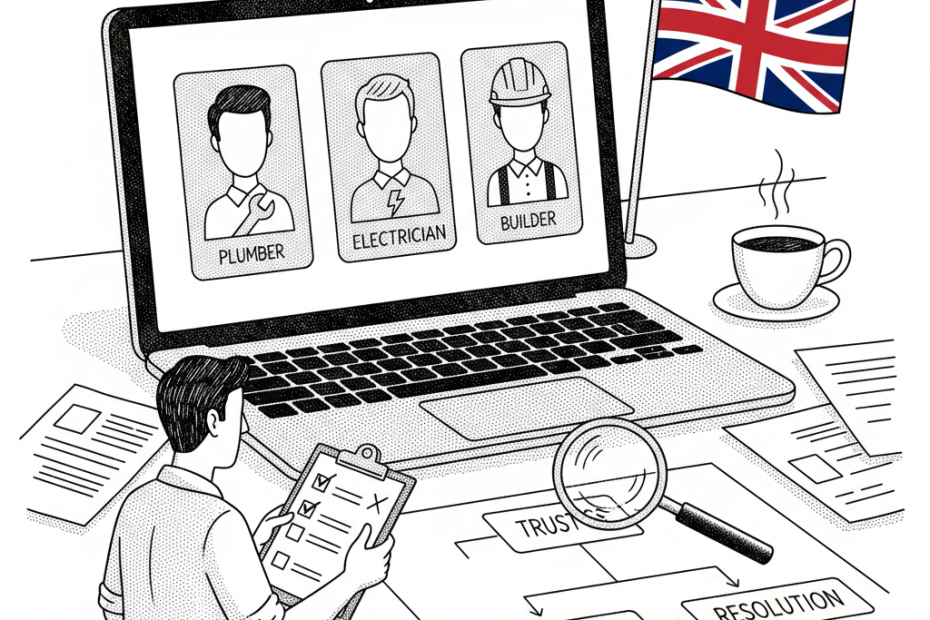
The Competition and Markets Authority has written to several trader recommendation platforms after reviewing practices in the sector, creating a timely compliance reminder for small firms that run, rely on or advertise through these services.
The update matters beyond the biggest online platforms. Many local tradespeople, home improvement businesses and service firms win work through directories, recommendation websites and review-led marketplaces. If those services overstate checks, handle complaints poorly or present customer reviews in a misleading way, small businesses can be pulled into a trust problem even when the work itself is good.
For small firms, the practical takeaway is to look at both sides of the relationship: how the platform presents your business to consumers, and whether your own claims, review prompts and complaint handling would stand up if challenged.
What the CMA has done
The CMA says it has completed further compliance work on trader recommendation platforms and has written to several platforms where it identified concerns with their practices. It has reminded those platforms to review what they do and make any necessary changes under the consumer protection law regime introduced by the Digital Markets, Competition and Consumers Act 2024.
The underlying CMA guidance is aimed at platforms that recommend traders to consumers. It covers advertising and marketing, vetting practices, complaints processes, monitoring, investigations and consumer reviews. The regulator has also pointed platforms to its separate guidance on fake review practices.
The issue is simple: consumers often use these websites because they believe someone has already checked the trader, the reviews or the way complaints are handled. If that impression is stronger than the reality, the platform may have a consumer law problem. Traders using the platform may then face customer confusion, reputational damage or pressure to prove claims they did not write themselves.
Why this matters to small trade businesses
For sole traders and small contractors, recommendation platforms can be a major source of leads. They can help new customers find a plumber, electrician, builder, cleaner, installer or repair business without relying only on word of mouth. But they also create a layer between the customer and the business.
That layer is where problems can start. A profile may suggest a business has passed particular checks. A badge may imply a level of monitoring. A review score may hide how complaints are investigated. A platform may advertise fast dispute resolution, even though the actual process is slow or limited.
Small firms should not assume this is only the platform’s problem. If a business repeats a platform badge in its own marketing, links heavily to a profile, asks customers to leave reviews there, or uses platform wording in quotes and proposals, it needs to be comfortable that the claims are accurate.
The wider lesson is similar to other operational resilience issues facing local firms: trust signals are now part of the sales process. Just as shops and trades have had to think harder about business security and customer confidence, as covered in our guide to the UK signal jammer crackdown, online reputation systems are becoming part of day-to-day risk management.
What to check on your platform profiles
Start with the profile customers actually see. Look at every badge, label, score, review snippet and claim about vetting. Does it say the business is checked, approved, monitored, verified, endorsed or guaranteed? If so, is it clear what that means in practice?
A small firm should ask the platform what checks are carried out, when they are repeated and what happens when a customer complains. That does not mean every platform must operate in the same way, but vague claims are risky. A customer who sees a strong trust signal may reasonably expect something more than a basic sign-up form.
Reviews deserve particular care. If a platform filters reviews, removes negative feedback, invites only certain customers to leave comments or highlights paid members more prominently, small businesses need to understand how that affects the impression being created. Do not lift review claims into your own website or adverts unless they are fair, current and properly contextualised.
Small businesses should also check whether platform leads create cash flow pressure. Some models involve upfront fees, paid credits or subscription commitments before work is won. If customer enquiries are slowing, or conversion rates are weaker than expected, it may be worth reviewing this alongside wider working capital pressures. Our piece on late payments and SME cash flow is a useful companion for that housekeeping.
Questions for platforms and marketplaces
Small businesses that run their own local directory, franchise marketplace or trade-matching service should treat the CMA update as a prompt for a fuller review. The key question is whether consumers can easily understand what the platform does and does not do.
That includes marketing copy, ranking systems, paid placements, complaint routes and the handling of poor reviews. If traders can pay for prominence, consumers should not be misled into thinking rankings are purely quality-based. If the platform says it investigates complaints, it should be able to show a process that works in practice. If reviews are moderated, the rules should be clear and applied consistently.
Under the DMCC Act regime, unfair or misleading commercial practices can carry significant risk. For small platform operators, waiting until a customer complaint or regulator query arrives is a poor strategy. A short internal audit now is likely to be cheaper than hurried remedial work later.
The practical takeaway
For small trade firms, this is a good week to review online profiles and lead-generation relationships. Save screenshots of important claims, ask platforms how vetting and complaints work, and make sure your own marketing does not repeat claims that are broader than the evidence.
For small platform operators, the job is more direct: review advertising, trader checks, complaint handling, monitoring and reviews against the CMA’s guidance. Where the consumer journey relies on trust, the business should be able to explain exactly how that trust is earned.
The strongest position is clear, boring and defensible. Tell customers what has been checked, avoid overstating what a badge means, keep review handling fair, and make the complaints route visible before a dispute becomes public.
Sources
- Competition and Markets Authority, Trader recommendation platforms: complying with consumer law, updated 28 May 2026
- Competition and Markets Authority, Fake reviews: advice for businesses
- Competition and Markets Authority, Unfair commercial practices