
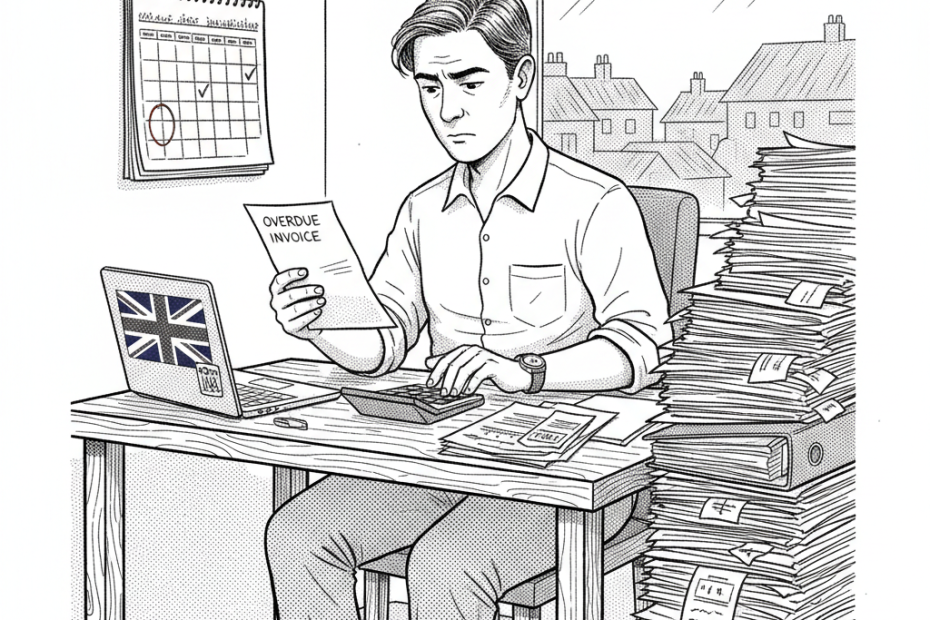
The government has introduced the Small Business Protections Bill to Parliament, setting out what ministers describe as the toughest late-payment regime in the G7.
For UK small businesses, the headline is simple: large firms could face a clearer duty to pay smaller suppliers on time, with stronger powers for the Small Business Commissioner and a proposed 60-day cap on payment terms. The detail will still need to move through Parliament, but the direction matters now for firms that depend on bigger customers, construction contracts or long payment chains.
What has been announced
The Bill, formally introduced in the House of Lords on 19 May, is aimed at reducing the time small suppliers spend chasing money they are already owed. Ministers say late payments close 38 businesses every day and cost the UK economy around £11 billion a year.
The proposed measures include a 60-day cap on payment terms for large firms paying smaller suppliers, mandatory interest on late payments at 8% above the Bank of England base rate, and action to ban retention payments under construction contracts. The government also says the Small Business Commissioner would gain stronger powers to investigate poor payment practices, adjudicate disputes and fine persistent late payers.
There is also a governance angle. The announcement says boards or audit committees of persistently late-paying large companies would have to publish clear explanations of poor payment performance and the steps being taken to improve it.
Why small firms should pay attention
Late payment is not just an admin nuisance. For small suppliers, it can decide whether wages, rent, stock, tax bills and subcontractors are paid without dipping into reserves or borrowing. A 30-day delay by one major customer can quickly become a cash-flow problem across the whole business.
BritishSME has previously covered why late payments are still squeezing UK SMEs. This new Bill is the next stage of that policy push: less about recognising the problem, more about changing the consequences for large customers that routinely pay slowly.
The construction point is especially important. Retentions can leave smaller contractors waiting for money long after work has been completed, which adds risk in a sector where materials, labour and subcontractor costs often have to be paid much sooner.
What to check now
Small suppliers do not need to rewrite every process before the Bill becomes law. But they can use the announcement as a prompt to tighten the basics that make payment disputes easier to manage.
Start with your standard payment terms. Check whether they are clearly written on quotes, order forms, contracts and invoices. Make sure customers know when payment is due, what happens if it is late, and who in your business should be contacted about invoice queries. Confusion at the start often becomes delay at the end.
Next, review your largest customers by payment behaviour, not just by sales value. A large contract that regularly pays late may be less healthy than it looks. Keep a simple record of invoice date, due date, payment date, query date and any reason given for delay. That makes patterns easier to spot and gives you better evidence if a dispute escalates.
If your firm works in construction, look specifically at retention clauses. Note where retentions are being withheld, when they are due for release, and whether the contract sets out a clear route for getting that money back. The proposed ban makes this an area to watch closely as the Bill develops.
What happens next
The Bill still has to pass through Parliament, so small firms should avoid assuming every proposal is already law. The practical step is preparation: tidy invoice records, identify customers with weak payment habits, and make sure someone is responsible for tracking the legislation and any later guidance from the Small Business Commissioner.
For owner-managed firms, freelancers and family businesses, this is also a useful moment to be firmer about payment culture. Clear terms, prompt invoicing, structured follow-up and written records will still matter even if the law becomes tougher on poor payers. Better rules help most when the business has the paperwork to use them.
The practical takeaway
The Small Business Protections Bill is not a reason to sit back and wait. It is a signal that late payment is moving higher up the policy agenda, with large firms facing more scrutiny over how they treat smaller suppliers.
The useful action this week is to run a quick payment-risk review: list your ten largest customers, check their usual payment speed, flag any contract terms over 60 days, and make sure overdue invoices are being chased consistently. If the Bill lands as planned, firms with clean records and clear terms will be in a better position to benefit.
Source: GOV.UK: Largest crackdown on late payments in over 25 years as landmark Bill enters Parliament.