The government’s latest intervention on petrol, diesel and heating oil will be worth watching closely if you run a small business that depends on vans, deliveries, site visits or rural premises.
On Friday, the Chancellor and Energy Secretary called in petrol retailers and energy suppliers, asked the Competition and Markets Authority to stay alert for unfair price rises, and pushed ahead with the Fuel Finder scheme that is meant to make pump prices easier to compare. At the same time, ministers signalled that extra help for households facing rising heating oil costs could be announced next week.
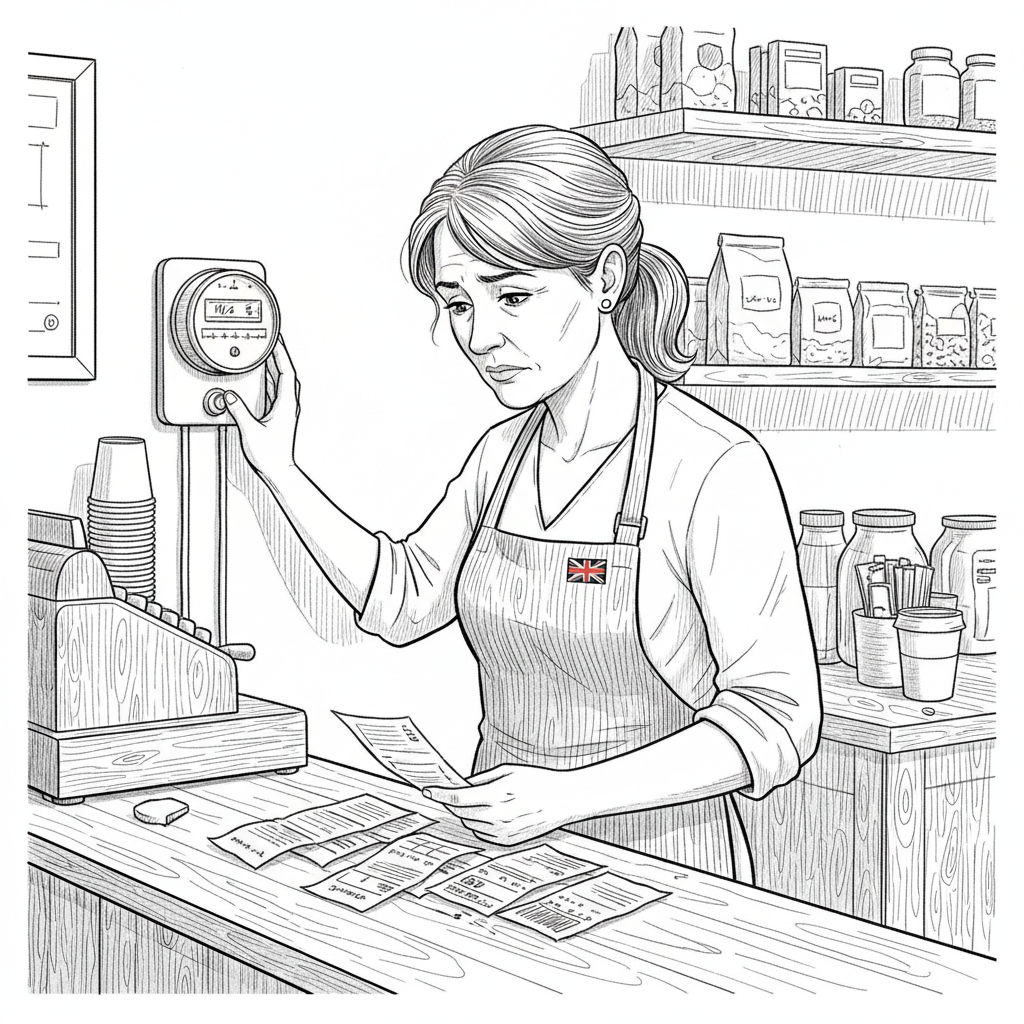
For small firms, this is not just Westminster theatre. Fuel and heating costs feed straight into margins, delivery pricing, customer demand and day-to-day cash flow. Tradespeople, mobile care providers, independent retailers, cafés, pubs, guesthouses and rural employers will all be looking at the same question: are these price pressures temporary, or do they need building into budgets now?
What has happened
According to the government, ministers met fuel bosses with a clear message that drivers should get a fair deal at the pump. Rachel Reeves said she would not tolerate companies exploiting global tensions to make excess profits, while Ed Miliband said all major fuel retailers should sign up to Fuel Finder so motorists can see where local prices are cheapest.
The government says supermarket groups are already providing real-time data and that almost 90% of retailers have registered, with action under way to bring in the remainder. It argues that better price visibility should increase competition and lower costs over time.
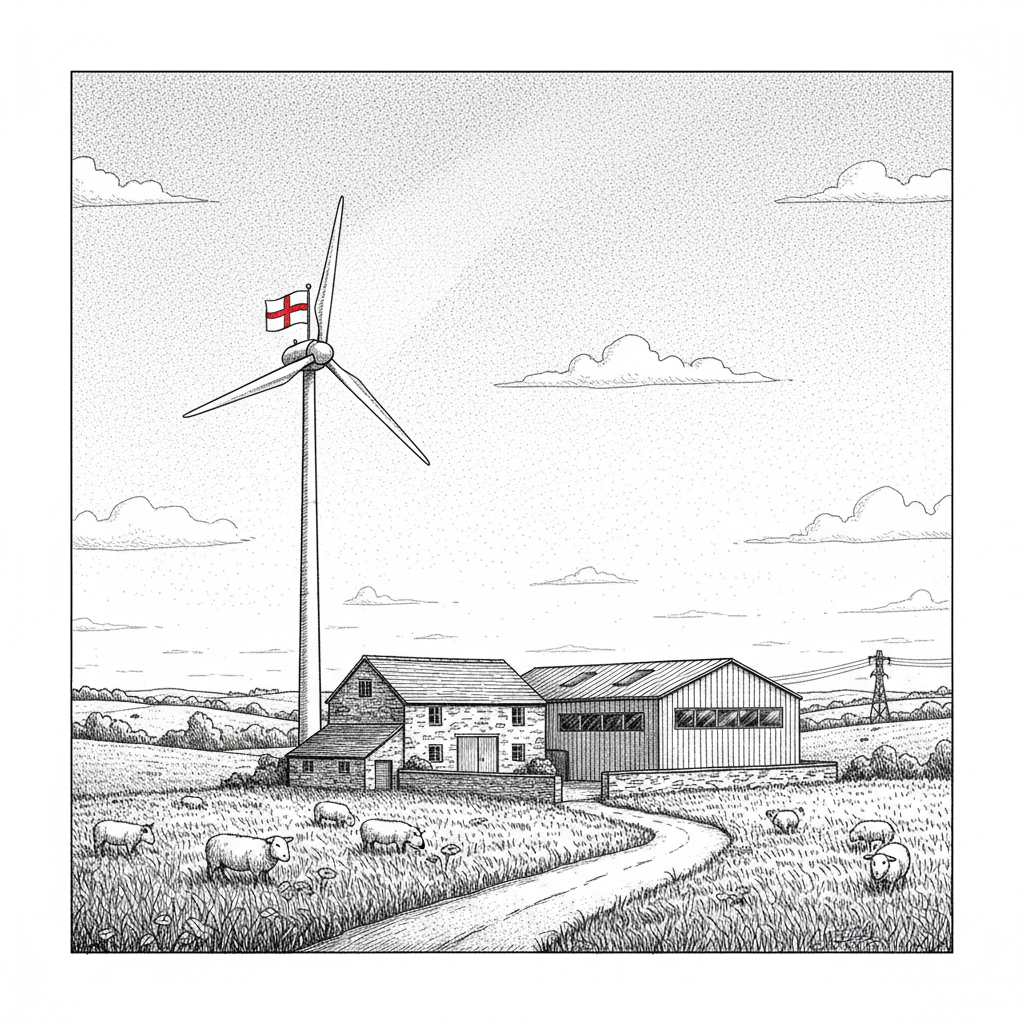
Alongside that, the Treasury has indicated support is being prepared for households struggling with heating oil. That matters because kerosene users, especially in rural areas, are outside Ofgem’s normal energy price cap. In practice, that leaves some communities more exposed when wholesale oil markets jump.
Why this matters to SMEs
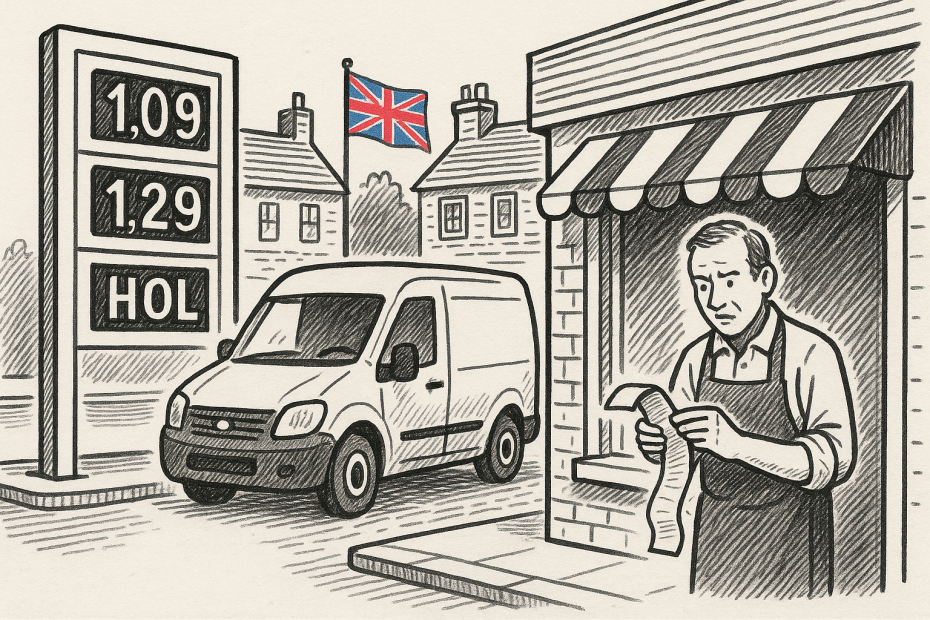
Small businesses do not need a national average to tell them when fuel is getting painful. They see it in van fill-ups, supplier invoices and customers becoming more cautious. A decorator covering three counties, a florist making weekend deliveries or a farm shop running refrigerated transport all feel higher pump prices very quickly.
There is also a second-order effect. If households in rural and off-grid areas are hit by higher heating oil bills, they may cut spending elsewhere. That can show up in slower bookings, smaller basket sizes and more price sensitivity for local firms. We have already seen signs of softer demand in the wider economy, as noted in our earlier piece on the UK economy flatlining in January.
For businesses already worried about running costs, this adds another moving part. It also lands only days after we looked at fuel duty uncertainty for UK small businesses. That means owners now have two separate issues to monitor: what global oil markets are doing right now, and what the tax position on fuel may look like later this year.
What Fuel Finder could and could not do
In theory, a stronger price-comparison tool should help owner-drivers and small fleets shop around more easily. That could be useful for sole traders, field engineers, delivery firms and anyone whose route gives them a choice of forecourts.
But it is not a magic fix. Many smaller businesses do not have the time to divert far from a route just to save a few pence per litre, and plenty of rural firms have very limited forecourt choice anyway. Fuel Finder may improve transparency, but it will not remove the underlying oil-price shock.
Still, transparency matters. If the scheme makes local price gaps more visible, that may at least give businesses a better basis for route planning, staff guidance and weekly cost checks.
What small businesses should do now
First, treat fuel and heating costs as live risks rather than background noise. If your business relies on vehicles, update your weekly margin check so you can see quickly whether jobs, delivery charges or call-out prices still stack up.
Second, look at where price spikes hit you indirectly. Hospitality and retail firms may not use much fuel themselves, but suppliers, customers and staff do. A rise in transport and household energy costs can still squeeze sales.
Third, communicate early if you may need to review pricing. Customers usually react better to small, explained adjustments than sudden jumps after costs have already bitten.
Fourth, keep an eye on any support announcement for heating oil users next week. Even where help is aimed at households, it can affect local spending conditions in rural areas and give a clue about whether ministers expect this pressure to last.
The practical takeaway
The government is trying to show it is watching fuel and heating oil prices closely, and greater price transparency is better than none. But for SMEs, the immediate lesson is simple: do not assume this will sort itself out quickly.
If your business depends on travel, deliveries or rural customers, now is the moment to review costings, monitor local prices and plan for another stretch of margin pressure. Small firms that react early usually cope better than those that wait for the monthly accounts to confirm the damage.
Sources
- UK government news release, Chancellor and Energy Secretary meet with fuel bosses in No11 as government order crackdown on pump prices, published 13 March 2026
- BBC News, Rachel Reeves to offer support over rising heating oil costs, published 14 March 2026