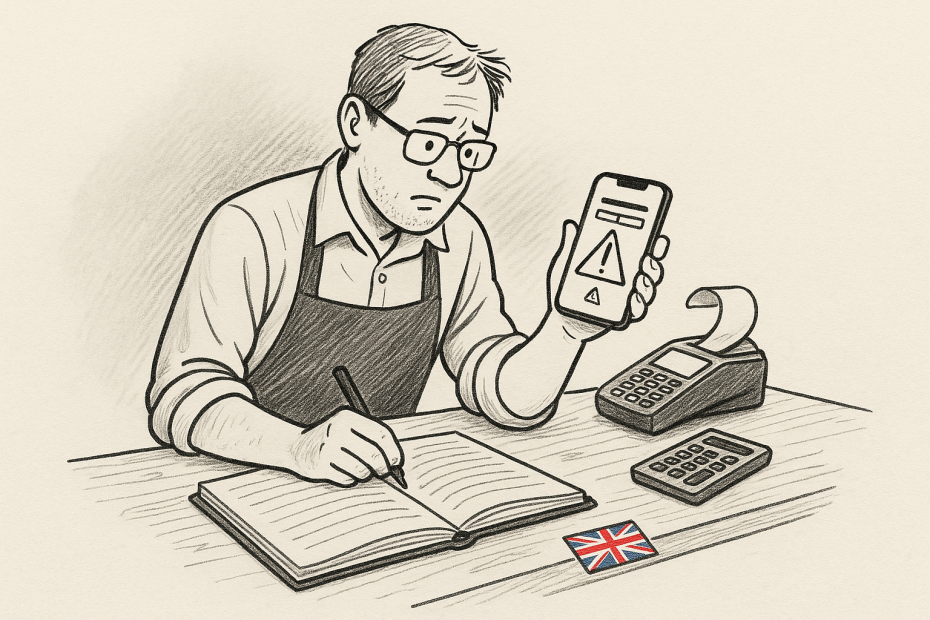
Lloyds Banking Group has apologised after some customers using the Lloyds Bank, Halifax and Bank of Scotland apps were briefly shown other people’s transactions instead of their own. For small businesses, that is more than an embarrassing tech slip. It is a reminder that digital banking problems can quickly turn into cash-flow confusion, payroll nerves and data-protection worries.
According to BBC reporting on Thursday morning, some users said they could see payments, charges and other account information that did not belong to them. Lloyds said the issue was identified quickly and resolved, but regulators are now asking questions about what happened and how customer data was protected.
What happened
The reported glitch affected internet banking and mobile app users across the group’s main retail brands. Customers told the BBC they were shown transactions from other accounts, including wage payments, direct debits and other sensitive references. Lloyds said it had resolved the issue and said nobody had access to customers’ accounts, but it is reviewing the cause.
The Information Commissioner’s Office said it was aware of the incident and would be making enquiries. The Financial Conduct Authority also said it was in contact with Lloyds Banking Group to understand what had happened and how the bank was resolving it.
That does not mean every business customer was affected. But for firms that rely on mobile banking to check balances, make supplier payments or keep an eye on incoming receipts, even a short-lived incident can cause real disruption.
Why small businesses should care
Most small firms now run at least part of their day through banking apps. Owners check card takings over breakfast, approve payments between jobs, and use account feeds to keep bookkeeping software up to date. When transaction data looks wrong, it can throw off much more than the bank app itself.
- Cash-flow decisions can go wrong. If money appears to have arrived when it has not, or if unfamiliar payments show up, owners can make bad calls on stock, wages or supplier payments.
- Bookkeeping can become messy. Businesses using bank feeds may need to double-check records before reconciling accounts.
- Staff and customer data worries can rise. If payroll references or identifying details were visible, businesses may worry about confidentiality as well as account accuracy.
- Trust takes a hit. Small firms need banks to be boring, reliable infrastructure. When that slips, owners lose time checking what is real and what is not.
This is especially relevant for sole traders, retailers, hospitality operators and service firms that use one main business account for most day-to-day activity. Larger businesses may have finance teams and backup processes. Small firms often just have the owner, their phone and a busy afternoon.
What to do if your business uses these banks
There is no need to panic, but this is a good day to be methodical.
- Review your recent transactions carefully. Check your app against receipts, invoices, card machine totals and any separate bookkeeping system.
- Delay non-urgent decisions if the figures do not look right. If you are unsure whether a payment has cleared, avoid making assumptions based on one app screen.
- Take screenshots of anything unusual. If you saw somebody else’s transactions or strange balances, keep a record with the time and date.
- Report issues through official bank channels. Use the app, website or published customer-service details, not links in social posts.
- Watch for follow-on scams. News events like this can trigger phishing emails and fake calls claiming to be from the bank or HMRC.
- Check your accounting entries before month-end work. If you use bank feeds, make sure imported data matches your real business activity.
The bigger lesson for SMEs
This incident is another reminder that digital banking resilience matters to small-business resilience. Many owners have no realistic backup when an app fails or displays the wrong information. A simple contingency plan helps: know how to access your account another way, keep a recent list of expected payments, and avoid relying on one live balance figure when timing is tight.
It is also a prompt to review how much sensitive information sits in payment references, payroll notes and customer records. Even if this incident turns out to have been limited and short-lived, it shows how quickly private financial details can become visible in the wrong place when systems fail.
The practical takeaway
Lloyds says the issue has been fixed, but small businesses that bank with Lloyds, Halifax or Bank of Scotland should still take ten minutes today to review account activity, confirm key payments and keep an eye out for scam follow-ups. In a busy small firm, catching a data or banking problem early is usually far cheaper than sorting it out later.