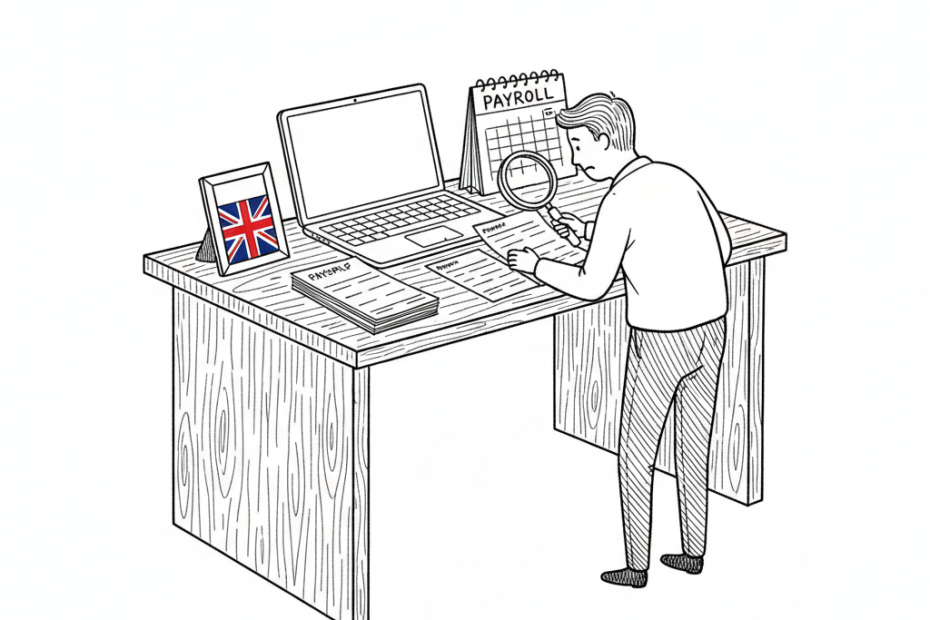
HMRC has updated its Employment Allowance guidance, giving small employers a useful reminder to check their payroll setup carefully when changing software provider.
The allowance can reduce eligible employers’ Class 1 National Insurance bill, so it matters directly to small companies, charities, care providers and other organisations with staff costs to manage. The latest GOV.UK update, published on 14 May 2026, is narrow rather than dramatic: HMRC says the section on changing software provider has been updated in its claiming guidance. But for busy small employers, that is exactly the kind of admin detail that can turn into a missed claim or duplicated process if nobody owns it.
The practical point is not that every employer has a new entitlement. It is that Employment Allowance claims sit inside payroll processes, and payroll processes often change when a business switches software, moves bureau, brings payroll in-house or changes accountant.
What has changed
HMRC’s main Employment Allowance guidance collection was last updated on 14 May 2026. The update note says the “Claiming Employment Allowance: further employer guidance” document has been changed under the section on “Change of software provider” and when employers need to claim Employment Allowance.
That may sound like a small technical update, but it is relevant because the allowance is usually handled through payroll software. A business changing systems part-way through a tax year needs to be clear about what has already been claimed, what needs to carry over, and whether any fresh action is needed in the new software.
For small firms, this sits alongside a broader pattern: more tax and payroll obligations are being pushed through digital systems, with less tolerance for loose admin. The same discipline that helps with Making Tax Digital preparation also applies here: know which system is responsible, keep records tidy, and do not assume a software switch has transferred every setting automatically.
Why it matters for SMEs
Employment Allowance is designed to support eligible employers with their secondary Class 1 National Insurance costs. For some small employers, the value is large enough to make a visible difference to cash flow across the year. That makes it worth treating as an active payroll control, not as a background setting that nobody reviews.
Small businesses are also more likely to have payroll responsibilities split between several people or providers. A director may approve the wage run, a bookkeeper may enter the figures, an accountant may review the year-end position, and a software provider may supply the filing process. When systems change, gaps can appear between those roles.
The risk is rarely glamorous. It is usually something mundane: the old software had the claim marked one way, the new software expects a different prompt, or the person managing payroll assumes the accountant has already checked it. That is why this kind of HMRC guidance update is worth a quick look even when the headline is not huge.
Who should pay attention
Employers changing payroll software should be first in the queue. That includes firms moving from spreadsheets or basic tools to cloud payroll, businesses switching provider because of cost or features, and employers moving payroll between an external bureau and an internal team.
Connected companies and charities should also be careful, because eligibility can depend on the wider structure rather than a single payroll in isolation. HMRC’s guidance collection includes separate documents on connected companies, connected charities, care and support workers, single-director companies and general eligibility.
Single-director limited companies should not assume they qualify. HMRC’s guidance says limited companies cannot claim Employment Allowance if they have just one director and that director is the only employee liable for secondary Class 1 National Insurance. That is a common SME scenario, so it deserves a deliberate check rather than a guess.
A sensible payroll housekeeping check
Small employers do not need to turn this into a major project, but they should make the allowance part of payroll handover and year-end routines. If software is being changed, confirm whether Employment Allowance has already been claimed for the tax year, whether the new system has the correct setting, and who is responsible for checking the next Employer Payment Summary.
Where a payroll bureau, accountant or bookkeeper is involved, the business should make sure the responsibility is explicit. That is particularly important during provider changes, when each party may assume the other has picked up the detail.
Employers should also keep a short record of the decision: whether the business considered itself eligible, who checked the guidance, and when the software setting or claim position was reviewed. That can be useful later if there is a query, staff change, or handover to a new provider.
The practical takeaway
The latest HMRC update is a good nudge for small employers to check one easily overlooked payroll setting. If the business uses Employment Allowance, or thinks it may be eligible, a software change is the moment to slow down and make sure the claim position has not been lost in the move.
For most firms, the best next step is simple: read the current HMRC guidance, check the payroll software position, and make sure the person running payroll knows whether Employment Allowance has been claimed for the current tax year. Small admin checks are dull, naturally, but so is finding out later that a useful allowance was mishandled.
Sources
- HMRC, Employment Allowance: further guidance for employers, last updated 14 May 2026
- HMRC, Claiming Employment Allowance: further employer guidance
- HMRC, Eligibility for Employment Allowance: further employer guidance