The government has announced almost £50 million of funding for drone and advanced air mobility regulation, including a new identification system for drones and faster approvals for legitimate operators. For small firms, the announcement is not just about flying taxis. It could affect delivery trials, inspections, security, logistics and the way commercial drone services are approved in the UK.
The package, announced on 5 May 2026, includes funding delivered through the Civil Aviation Authority to support the systems needed for more routine drone use. It also puts a strong emphasis on enforcement, with a “numberplate” style ID system intended to help police identify illegal or nuisance drone users.
What has happened
The Department for Transport says £46.5 million will be used to unlock growth in drones and advanced air mobility. That includes nearly £20.5 million for a bespoke drone identification system and £26.5 million for smarter regulation, digital processes and work to reduce barriers for approved operators.
The planned drone ID system, described by ministers as a numberplate system for the skies, is intended to show a drone’s identity and location during flight, make information available through a secure online system for authorised users, and keep historic flight data. The stated aim is to make it easier to act against illegal users while clearing the path for responsible commercial activity.
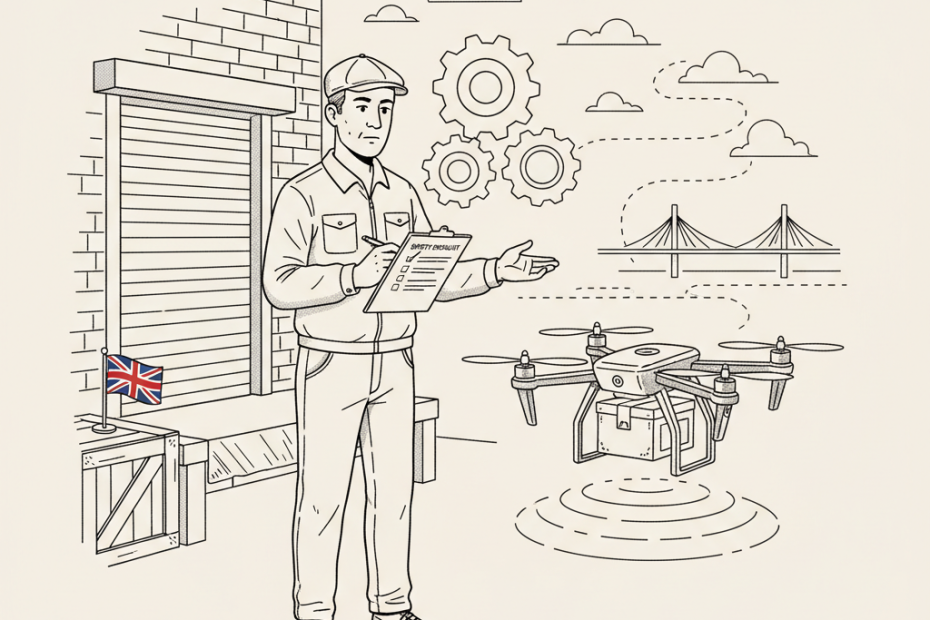
The government also says the funding should speed up approvals for drone operations in areas such as emergency response, medical logistics and infrastructure inspection. It has linked the work to wider ambitions for advanced air mobility, including flying taxis from 2028, but the more immediate SME relevance is likely to be in routine drone operations and the services built around them.
Why SMEs should pay attention
For most small businesses, drones are not yet an everyday tool. But the direction of travel matters. If approvals become faster and more predictable, more SMEs may be able to use drone services for site surveys, roof inspections, agricultural monitoring, security checks, media work, stockyard monitoring, construction progress updates or deliveries in specific settings.
That could create opportunities for drone operators, software firms, training providers, repair businesses, data specialists and local service companies that work with construction, estates, farms, logistics or infrastructure customers. It may also create new expectations from larger clients that want suppliers to understand permitted drone use, data handling and safety requirements.
The security side is important too. Clearer drone identification may help venues, warehouses, farms and other premises distinguish between lawful operators and suspicious activity. It sits alongside wider operational resilience concerns for SMEs, including business security and loss prevention issues such as those covered in our recent article on the UK signal jammer crackdown for shops, trades and local employers.
What small firms should check now
First, decide whether drones could realistically solve a business problem rather than simply adding novelty. A roofing firm, surveyor, farm, facilities manager or events business may have a clearer use case than a retailer with no site-management need.
Second, check whether your current insurance, contracts and data-protection processes would cover drone-related work. Images, location data, customer premises, neighbouring properties and safety logs can all create practical compliance questions. SMEs should avoid assuming that a cheaper or faster drone service is automatically simpler from a risk point of view.
Third, if you already use drone contractors, ask how they expect the new ID and approval changes to affect operations. Sensible questions include who holds the approvals, what records are kept, what happens if a flight is challenged, and how footage is stored or deleted.
Fourth, watch for CAA guidance and digital application changes. If the promised streamlining arrives, smaller operators may find it easier to plan legitimate work. But until detailed rules are in place, it is worth treating the announcement as a signal to prepare rather than a green light to launch new services overnight.
The practical takeaway
The funding suggests the UK wants more commercial drone activity, but with stronger identification and enforcement. That combination is worth noting: the opportunity is not unregulated experimentation, but safer and more predictable use of drones by firms that can show they are operating properly.
For SMEs, the best next step is to map where drones could reduce cost, time or risk, then keep an eye on CAA processes and supplier standards. Businesses that prepare early may be better placed to use drone services when approvals become easier, while avoiding the legal, safety and reputational problems that come from cutting corners.
Sources: GOV.UK announcement on drone and advanced air mobility funding, Department for Transport and Civil Aviation Authority.