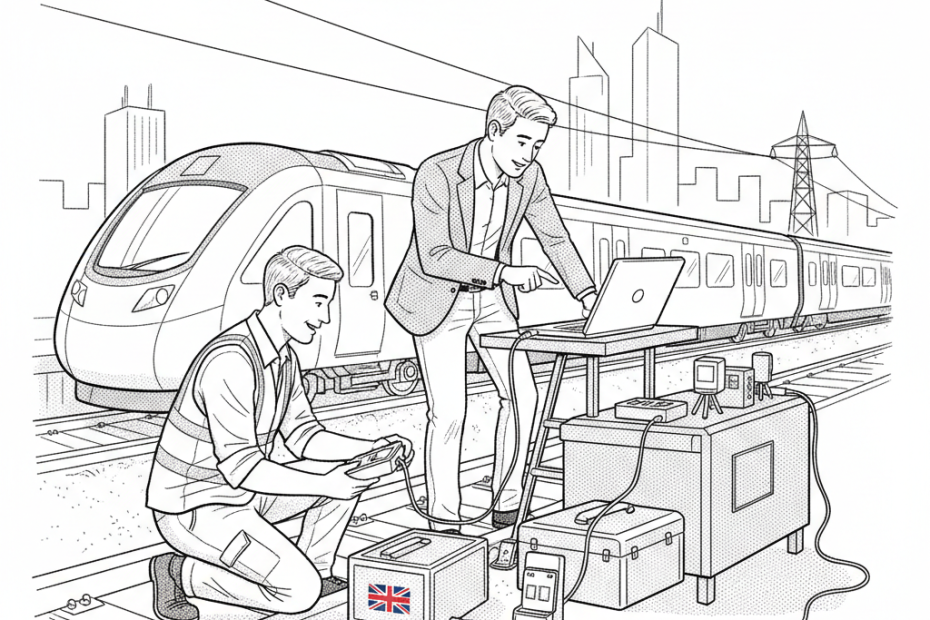
A new £4.8 million rail innovation competition has opened for organisations developing technology that could improve safety, reliability, passenger experience and environmental performance on Britain’s railways.
The Department for Transport said the latest First-of-a-Kind competition, run with Innovate UK, opened on 11 May 2026. Applications are due by 24 June 2026, with successful projects expected to start from 1 September 2026.
For small firms, this matters because rail innovation is not only for large transport groups. Previous rounds have backed practical technologies from specialist businesses, including AI, monitoring and safety systems that were tested in real railway and infrastructure settings. SMEs with a credible product, a clear rail use case and the ability to work with industry partners should look closely at the brief before the deadline passes.
What has opened
The First-of-a-Kind programme is now in its ninth round. Government says it has backed the competition with £62.5 million to date, with the latest round offering £4.8 million for new projects.
This year’s competition is aimed at persistent railway challenges, including safety concerns, service reliability, anti-social behaviour, delivery of major projects, passenger service performance and reducing the industry’s environmental impact.
The Department for Transport said the programme is part of the wider move towards Great British Railways, with ministers looking for technology that can help modernise track and train. For suppliers, the important point is that the competition is designed to help ideas move from concept to demonstration and then towards commercial adoption.
Why this is relevant to SMEs
Many small technology and engineering firms struggle with the same problem: they may have a useful product, but not the proof, railway relationships or live-site evidence needed to win larger infrastructure contracts. A grant-backed demonstration can help bridge that gap.
Past examples show the range of possible opportunities. The government announcement highlighted previous winners working on intelligent warning systems for low-clearance bridge and tunnel strikes, automated delivery monitoring at an HS2 development site, AI-assisted infrastructure tools and safety insight from existing CCTV.
That should interest businesses in areas such as sensors, data analytics, AI, computer vision, asset monitoring, accessibility, safety, project delivery, carbon reduction, construction technology and operational resilience. It may also be relevant to engineering consultancies and software firms that already serve adjacent sectors such as construction, logistics, highways, utilities or manufacturing.
BritishSME has previously looked at how targeted public funding can create openings for specialist suppliers, including in engineering and defence supply chains. The rail competition has a similar lesson: the strongest opportunity is often not the headline funding pot, but the chance to prove a capability in a market that can otherwise be difficult to access.
What applicants should check now
First, check whether the product solves a railway problem clearly enough. A general technology pitch is unlikely to be enough. Applicants should be able to explain what problem they are addressing, who in the railway would use it, how it would be tested and what benefit it could deliver.
Second, look for evidence. Even an early-stage project needs a credible route from idea to trial. That may include existing pilots in another sector, customer feedback, safety assumptions, technical validation or a partner that understands railway operations.
Third, think about adoption. Rail buyers are likely to care about integration, safety, procurement, data handling, maintenance and long-term support. SMEs should avoid presenting innovation as a standalone gadget and instead show how it would fit into real operational workflows.
Fourth, review capacity. A funded project can be valuable, but it still takes management time, reporting discipline and delivery focus. Small firms should be honest about whether they can meet project milestones while continuing to serve existing customers.
The practical takeaway
The latest First-of-a-Kind round is a timely opportunity for UK SMEs that can bring practical technology to railway safety, reliability, passenger service or environmental performance. The deadline of 24 June 2026 gives interested firms only a short window to assess fit, find partners if needed and prepare a serious application.
For small suppliers, the best first step is to read the competition details, map the product against the stated rail challenges and decide whether there is a clear demonstration project. If the answer is yes, this could be more than a grant application. It could be a route into a complex market where proven, deployable solutions are in demand.
Source: Department for Transport announcement on the First-of-a-Kind rail innovation competition, published 11 May 2026.