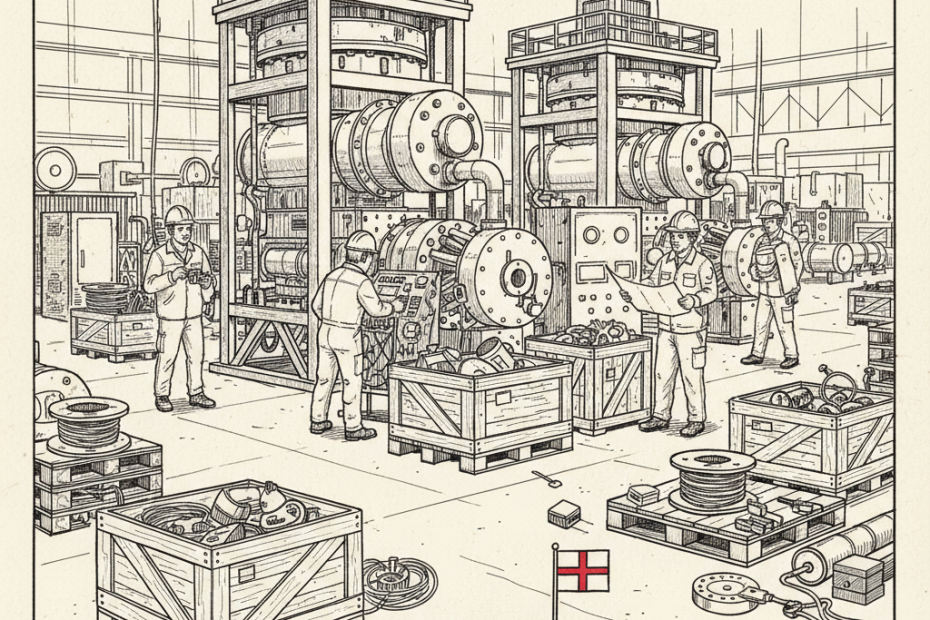
South Yorkshire has landed a major hydrogen investment that could matter well beyond the region’s biggest factory gates. The government and Great British Energy say they will back Sheffield-based ITM Power with a combined £86.5 million package to expand hydrogen equipment manufacturing, with more than 400 jobs expected and a 1GW expansion planned for the company’s local facility.
For small firms, the headline is not just that one clean-energy business is getting bigger. It is that a serious manufacturing project is being tied to a UK supply chain, construction work and future industrial demand at a time when many engineering and fabrication SMEs are still looking for steadier pipelines of work.
What has been announced
According to the government, Great British Energy will invest £40 million in ITM Power, alongside a further £46.5 million government grant in principle. The money is intended to help scale domestic manufacturing of electrolysers in South Yorkshire. These are the units used to split water into hydrogen and oxygen using electricity, making them a key part of green hydrogen production.
The government says the investment should support a 1GW expansion at ITM’s South Yorkshire facility and help create more than 400 skilled jobs across manufacturing, construction and the wider supply chain. One important caveat is that the grant element is still subject to review by the Subsidy Advice Unit, so this is not yet a completely rubber-stamped cheque. Even so, it is a substantial public vote of confidence in hydrogen manufacturing in England.
There is also a technology angle behind the announcement. Earlier this year, ITM Power said development of its next-generation CHRONOS stack platform was progressing to plan, including a further 40% reduction in iridium loading while maintaining performance and longevity. That matters because iridium is a costly raw material, and lower material intensity could help bring equipment costs down over time.
Why SMEs should care
Not every small business will win work from a hydrogen factory, obviously. But firms in machining, metalwork, electrical systems, controls, logistics, maintenance, specialist recruitment, industrial cleaning, testing, packaging and site services should at least clock what is happening.
Large industrial projects rarely spend all their money with one headline name. They create demand around the edges too: civils work, fit-out, transport, components, inspection, subcontract labour and ongoing support. For Yorkshire firms in particular, this looks like the sort of announcement worth tracking before procurement decisions start moving quietly behind the scenes.
It also speaks to a wider question many SMEs are asking: where will practical growth come from if consumer demand stays patchy? BritishSME recently looked at how flat UK growth is keeping pressure on margins and confidence. In that sort of climate, regional industrial investment can matter more than grand national slogans, because it creates identifiable local work rather than abstract optimism.
Why South Yorkshire matters here
South Yorkshire already has a credible advanced manufacturing base, and the government is clearly trying to lean into that rather than invent a new cluster from scratch. That gives the announcement more weight than a generic promise about green jobs somewhere down the line.
For smaller manufacturers, that existing base matters. A region with established engineering capability, tooling knowledge and industrial labour is more likely to generate real contract opportunities than a place starting from zero. The same logic sits behind other regional investment stories, including how Scotland’s defence growth push could create openings for specialist engineering SMEs.
The practical takeaway for small firms
If you run an engineering, industrial or business-services SME, this is a story to watch rather than just admire from afar. Check whether your offer fits hydrogen, clean-energy or advanced manufacturing supply chains. Tighten up your capability statement. Make sure accreditations, case studies and contact details are current. If you are based in Yorkshire or work nationally into industrial projects, this is exactly the sort of development that can turn into real opportunities six months later for firms that were paying attention early.
It is also a reminder that clean-energy policy is not only about utility bills and net-zero targets. For some smaller firms, it is becoming a route to contracts, hiring and regional growth. That will not be true for everyone. But for engineering-led SMEs, this South Yorkshire investment looks a good deal more concrete than the usual ministerial waffle.