
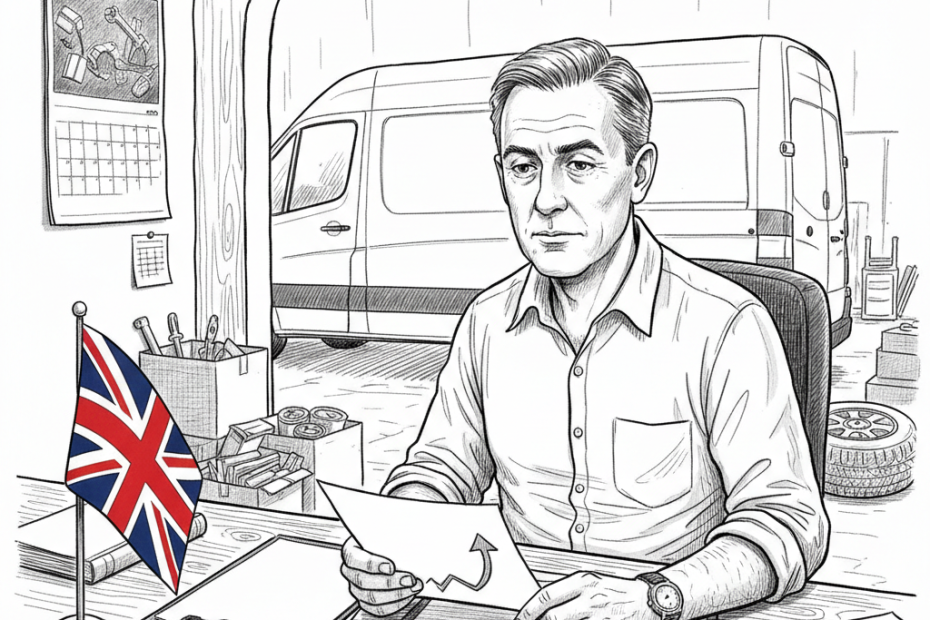
Oil prices have jumped again after fresh disruption around the Strait of Hormuz, sending Brent crude back towards $96 a barrel. For UK small businesses, that does not automatically mean empty forecourts or an overnight crisis, but it does mean another warning that fuel, delivery and wider operating costs could become more volatile again very quickly.
The immediate trigger was President Donald Trump saying the US navy had intercepted and seized an Iran-flagged cargo ship, while Iran said ships approaching the strait would be targeted. The route matters because roughly a fifth of global oil and liquefied natural gas trade usually passes through it. When that flow looks uncertain, markets react fast.
Why this matters to smaller firms
Many SMEs do not buy crude oil, but they do pay for the knock-on effects. Higher oil prices can feed into pump prices, courier charges, supplier surcharges, staff travel costs and inflation expectations more broadly. For trades, retailers, hospitality operators, wholesalers and service businesses running vans or relying on frequent deliveries, even a modest rise can chip away at margins.
That is why this matters beyond the energy sector. The Bank of England’s Andrew Bailey told the BBC last week that the world is facing a “very big energy shock” that will push up prices, even if policymakers are still weighing what it means for interest rates and growth. That combination is awkward for SMEs, because it can mean cost pressure returns just as customer demand stays fragile.
There is some reassurance in the short term. Chancellor Rachel Reeves said on Thursday that the UK had “no issues with supply at the moment” for petrol, diesel or jet fuel. So this is not the same as saying every small business should expect immediate shortages. But the wider message is that international energy disruption is still feeding uncertainty into UK business planning.
What owners should watch now
First, keep an eye on transport-heavy costs rather than focusing only on the headline oil price. If your business uses vans, sends engineers on the road, depends on chilled deliveries or buys from suppliers with long logistics chains, ask where a renewed rise would show up first. It may be in courier invoices, minimum order levels, or revised delivery charges before it appears anywhere else.
Second, review whether your pricing still leaves enough room for another bout of energy-related cost inflation. BritishSME recently looked at why fuel costs remain a live issue for transport-dependent firms. If your margins already look thin, this is a good moment to revisit delivery zones, call-out fees, low-value orders and any quotes that assumed calmer fuel markets.
Third, revisit cash-flow timing. Rising operating costs often hurt smaller firms most when money goes out faster than it comes in. If customers are taking longer to pay or stock has to be bought ahead of price rises, the squeeze can build quickly. That links to a wider pattern BritishSME has covered before in the pressure weak growth can place on demand and confidence.
A planning story, not a panic story
The sensible response is not panic buying or dramatic operational changes after one market move. Oil has been swinging sharply for weeks as headlines around Iran, US policy and the Strait of Hormuz change day by day. But the latest jump is strong enough to justify a quick planning check, especially if fuel and delivery costs are already a sensitive part of your cost base.
For many SMEs, the practical checklist is simple: confirm where fuel exposure sits in the business, speak to key suppliers early if logistics costs start moving, and avoid letting older quotes or delivery promises drift too far from current conditions. Businesses that do that calmly now will be in a better position if volatility lasts longer than the market hopes.
Sources
- BBC News, Oil prices jump after Trump says Iranian ship seized, published 20 April 2026
- BBC News, No issues with UK fuel supply, says Reeves, published 16 April 2026
- BBC News, Big energy shock will push up prices, Bank of England boss tells BBC, published 16 April 2026