
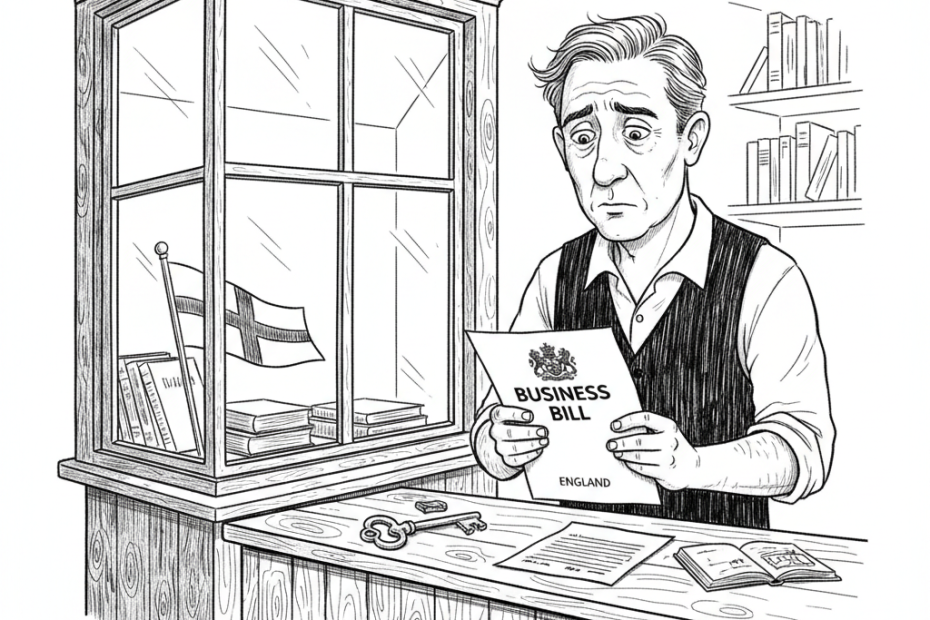
Small firms in England that are protected by Supporting Small Business Relief should check how a new government update affects empty premises, handovers and reoccupation after the 2026 rates revaluation.
The Ministry of Housing, Communities and Local Government has issued a new business rates information letter to English billing authorities. The letter says the government is amending the eligibility criteria for 2026 Supporting Small Business Relief so that it lines up with the treatment of vacancy and reoccupation under Transitional Relief.
The practical change is narrow but useful. A change of ratepayer, or a period when the property is vacant, after 31 March 2026 will no longer affect eligibility for the Supporting Small Business Relief scheme. The amendment is backdated to 1 April 2026.
For small businesses, that matters because business rates support can be easy to lose sight of during a move, sale, lease change or short gap between occupiers. If a premises is eligible for the relief, the update means the relief is not automatically disrupted simply because the ratepayer changes or the property has a period of vacancy after the end of March 2026.
What has changed?
Supporting Small Business Relief is intended to cushion some ratepayers from sharp bill increases linked to revaluation. The government says the change brings the scheme into line with Transitional Relief, because both are designed to limit increases caused by revaluation rather than to reward a particular occupier staying in place.
The new letter also makes clear that there is still an important exception. Eligibility will continue to be lost if the property becomes occupied by a charity or Community Amateur Sports Club.
The update is aimed at billing authorities, but small firms should still pay attention because the impact will show up in council business rates billing and relief decisions. Businesses taking on premises, leaving premises, or returning a vacant unit to use should not assume that an old relief position has vanished without checking the local authority calculation.
Why it matters for SMEs
Business rates are one of those fixed costs that can make a viable small premises feel much less comfortable. For retailers, hospitality businesses, workshops, salons, small offices and local service firms, a rates bill can sit alongside rent, wages, utilities and insurance as a recurring cost that arrives whether trading is strong or not.
The update will be especially relevant where a small premises changes hands during the 2026 rating year. That could include a shop bought as a going concern, a small office lease assigned to a new business, or a unit that has been empty briefly before a new occupier moves in.
It may also help businesses spot billing errors. If a bill changes after a move or reoccupation, the owner or finance lead should check whether Supporting Small Business Relief has been applied correctly and whether the local authority has treated the vacancy or ratepayer change in line with the updated guidance.
This is not the only rates-related change small firms have had to track. Earlier this year, BritishSME covered how business rates relief changes for retail, hospitality and leisure SMEs were moving through the system. Taken together, the message is straightforward: reliefs are worth checking rather than assuming the first bill is the final word.
What to check now
Small businesses in England with premises affected by the 2026 revaluation should check their latest demand notice, any relief lines on the bill, and any correspondence from the local council. If the business has recently moved into premises, taken over a unit, vacated a site or reopened one, the Supporting Small Business Relief line deserves a closer look.
Owners should keep copies of rates bills, lease dates, occupation dates and any council emails. If the bill looks wrong, it is usually better to ask the billing authority for a clear explanation early, before payment plans and cash-flow assumptions are built around the wrong figure.
The source document is the government’s Business Rates Information Letter 5/2026 on Supporting Small Business Relief, published on 26 May 2026.