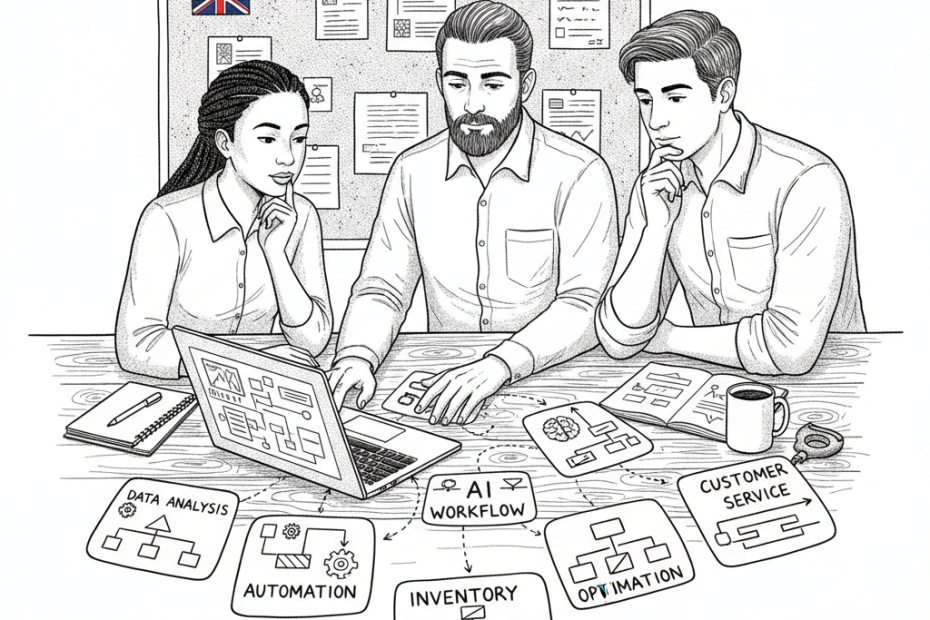
The government has announced more than £200 million of support aimed at helping British companies adopt AI and helping workers build the skills to use it. For small businesses, the useful part is not the headline number alone. It is whether the schemes that follow give owners a clearer, lower-risk way to test AI in real work rather than being left to guess which tools are safe, affordable and worth the disruption.
The announcement, published on 8 June 2026, says the package will include an expansion of the BridgeAI scheme, additional funding for AI adoption and innovation, support linked to AI Growth Zones, sector-led AI adoption plans, and new advisory growth labs where businesses, regulators and experts can trial AI in working environments. The government also says major firms and trade bodies will share data and insights on workplace AI use to inform future policy and help smaller companies learn what is working.
That matters because many SMEs are now past the stage of asking whether AI exists. The harder questions are more practical: where can it save time without weakening customer service, what data can staff safely put into tools, how should managers explain the change to employees, and who is accountable if automated output is wrong?
For shop owners, tradespeople, agencies, manufacturers and local service firms, the most valuable support is likely to be guidance that turns those questions into checklists. A small firm does not need a grand AI strategy before improving how it drafts routine emails, summarises long documents, checks stock patterns or supports basic admin. It does need clear rules on customer data, staff review, record keeping and when human judgement must stay in control.
The BridgeAI expansion may be worth watching closely. The government says £100 million will go towards matching British companies with British AI, with support on skills, assurance and practical adoption. If that develops into accessible help for smaller firms, it could reduce one of the biggest barriers to adoption: knowing whether a product is credible and suitable for a business that lacks an in-house technology team.
There is also a workforce angle. The announcement points to AI skills training, industry partnerships and trade union involvement. Employers should treat this as an HR issue as much as a technology issue. Staff are more likely to use new tools well if they understand what the business is trying to improve, how their work may change, and where the limits are. BritishSME recently covered the related question of AI training and entry-level jobs for small businesses, and the same principle applies here: training should be tied to actual tasks, not vague enthusiasm.
The sector-led adoption plans are another area to monitor. The government says plans for areas such as advanced manufacturing and financial services will test what works and share lessons more widely. Smaller suppliers in those sectors may find that AI expectations arrive through customer contracts, quality requirements or procurement conversations before they arrive through a formal government scheme.
For now, small firms can take three practical steps. First, list the repetitive tasks that take staff time but do not require final judgement, such as first drafts, summaries, filing, customer query triage or internal knowledge searches. Second, decide what information must never be entered into public AI tools, including sensitive customer data, confidential pricing and employee information. Third, give one person responsibility for tracking credible support as the government turns this announcement into live programmes.
The opportunity is real, but so is the risk of buying software before the business case is clear. The strongest SMEs will be those that use the coming support to run small, measurable trials: one process, one team, one clear outcome, and a named person checking the result before it affects customers.
Sources: GOV.UK announcement on AI adoption support; AI Adoption Summit speech.