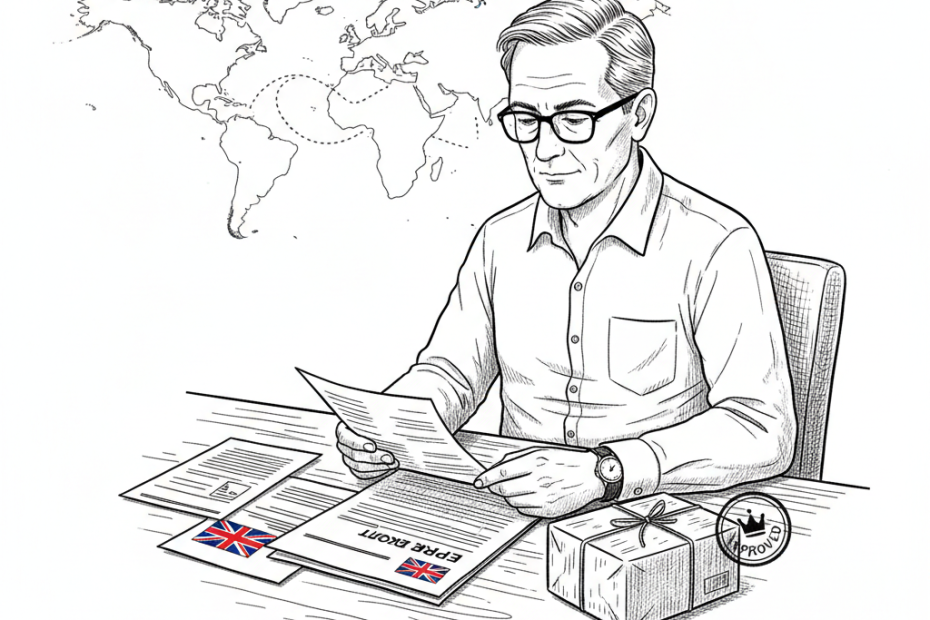
The UK-India free trade agreement is due to enter into force on 15 July 2026, giving small exporters and importers less than a month to get ready for the first day of trading under the new terms. The Department for Business and Trade said businesses will be able to use the agreement from that date, with tariff cuts and other changes intended to lower barriers between the two markets.
For SMEs, the headline numbers are not the whole story. Government says the deal could increase bilateral trade by £25.5bn a year in the long run and boost UK GDP by £4.8bn, but the immediate question for a smaller firm is simpler: can the business prove that its goods qualify, price orders correctly, and give customers or suppliers clear paperwork from day one?
Where the opportunity may be
The government highlighted several sectors that will see tariff changes. Whisky tariffs are expected to fall from 150% to 40%, automotive tariffs from 100% to 10% under a quota, and tariffs on some cosmetics will be removed either immediately or over a longer period. Those examples will matter most to firms already selling into India, supplying larger exporters, or testing demand through distributors and trade partners.
Importers should also pay attention. The UK will cut tariffs on some Indian goods, including clothing, footwear and some food products. A small retailer, wholesaler or hospitality business that buys from India may need to ask suppliers how landed costs, delivery terms and customer prices will change once the agreement is live.
The deal will not automatically make every order cheaper or easier. Currency movements, shipping costs, distributor margins, regulatory requirements and minimum order sizes can still outweigh a tariff saving. SMEs should treat the start date as a prompt for a commercial review rather than a guarantee of better margins.
Origin paperwork is the practical deadline
The most urgent admin point is origin. Government says businesses planning to benefit from tariff reductions must register with HMRC and prepare to complete origin declarations under the UK-India FTA. In practice, that means exporters should check whether their products meet the relevant rules of origin and whether their records are good enough to support the declaration if challenged later.
This is especially important for firms that assemble, repackage or customise goods using parts from several countries. A product sold by a UK business is not automatically UK-origin just because the seller is based in Britain. Owners should review bills of materials, supplier statements, processing steps and product classifications before promising a customer a reduced-duty route.
Smaller firms should also decide who is responsible for the paperwork. Sales teams may want to move quickly once customers ask about the new deal, but finance, logistics and compliance need to agree the process first. A short internal checklist can prevent mistakes: product code, destination, origin rule, evidence held, declaration wording, Incoterms, and the person approving the shipment.
What to ask suppliers and customers now
For exporters, the next few weeks are a good time to contact Indian distributors, agents and larger customers. Ask which products they expect to order under the new terms, what documentation they will need, whether local import procedures are ready, and whether any pricing already quoted should be refreshed after 15 July.
For importers, ask Indian suppliers whether they can provide origin evidence, whether product prices or freight terms are changing, and how quickly they can update invoices and customs paperwork. If a supplier cannot answer yet, build that uncertainty into pricing and delivery promises rather than assuming savings will arrive immediately.
There is also a cash-flow angle. A reduced tariff may help margins, but new demand can still strain stock, deposits, credit insurance and working capital. SMEs should avoid taking on larger export orders without checking payment terms, currency exposure and delivery risk. A trade agreement opens a door; it does not replace basic credit control.
People moving between the UK and India
The government also pointed to the UK-India Double Contributions Convention Agreement, which is due to enter into force at the same time as the FTA. It will extend the period during which eligible UK nationals moving to India for work can continue building entitlement to a UK State Pension while paying National Insurance contributions in the UK, from 36 months to 60 months. Government says the arrangement is reciprocal and applies to highly skilled professionals on pre-existing visa routes.
That could matter for SMEs sending specialist staff to India to support contracts, installations, partnerships or technical projects. It is not a reason to move people without advice, but it is a reminder to check payroll, mobility and social security arrangements before agreeing a long assignment.
What SMEs should do before 15 July
The safest preparation is practical and narrow. Identify the products or services most likely to be affected. Check whether goods qualify for preferential terms. Register with HMRC where required. Ask logistics partners how declarations will be handled. Update quotes and contracts only when the business is confident about costs, evidence and responsibilities.
Owners should also brief customer-facing staff. If a buyer asks whether the deal means immediate savings, the answer should be accurate rather than optimistic. Some products may benefit quickly; others may not qualify, may phase in over time, or may face non-tariff requirements that still need work.
The opportunity is real, particularly for firms already trading with India or sitting in supply chains that do. But the businesses that benefit first are likely to be the ones that turn the political announcement into clear admin, pricing and supplier conversations before the start date arrives.
Sources
Sources: Department for Business and Trade, UK-India FTA enters into force on 15 July; GOV.UK guidance on registering to complete origin declarations under the UK-India Free Trade Agreement.