
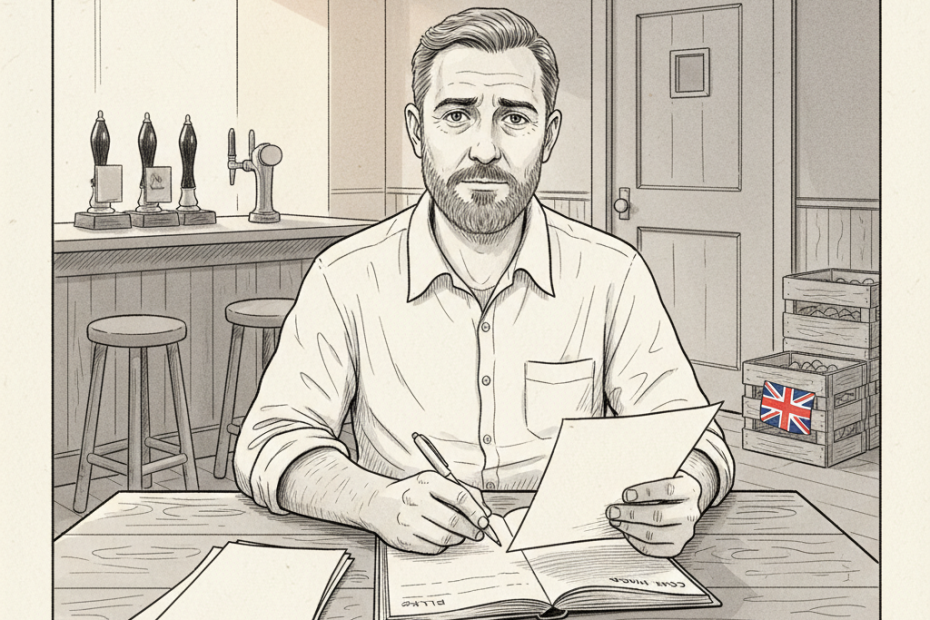
Britain’s pubs are still closing at a worrying pace, and the latest figures should make small hospitality firms look hard at costs, cash flow and resilience before the quieter parts of the trading year arrive.
According to figures reported by the British Beer and Pub Association and covered by the BBC, 161 pubs closed across England, Scotland and Wales in the first three months of 2026. That is almost two closures a day, with the industry estimating around 2,400 jobs lost. For independent pubs, bars, cafés and food-led venues, the message is not simply that the pub sector is under pressure. It is that healthy footfall does not always translate into a safe business when fixed costs, payroll, rates and supplier bills keep rising.
What has happened
The BBPA says the first-quarter closure figures show the need for longer-term support for pubs and wider reform of the tax burden on hospitality. The government says it is already backing pubs through measures including a 15% cut to April business rates bills, a two-year freeze, draught duty changes and extra hospitality support funding.
Those details matter because business rates, wages, energy, insurance, food costs and finance costs all hit venues before a pint, meal or coffee has produced any profit. A pub can be busy on a Friday night and still struggle if weekday trade is soft, supplier prices have moved, or a refinancing decision lands at the wrong moment.
The regional picture is uneven. The BBC report says Wales was the only area in the latest Great Britain data to record an increase in pub numbers, while Scotland saw the largest losses in the quarter. For small operators, that is a reminder to judge conditions locally rather than assuming national headlines match what is happening on one high street, village route or tourist patch.
Why it matters for SMEs beyond pubs
Pubs sit at the centre of a much wider small-business chain. Brewers, food wholesalers, cleaners, trades, maintenance firms, event suppliers, taxi firms and local shops can all feel the knock-on effect when a venue cuts hours or closes. If hospitality customers are part of your order book, this is a prompt to revisit your own exposure.
The pressure also overlaps with issues many SMEs are already watching: weak demand, cautious consumers and margin squeeze. If your business relies on discretionary spending, it is worth reading this alongside our recent note on the UK economy and what small businesses should watch now. The pub figures are another signal that turnover alone is not enough; the shape and profitability of that turnover matter.
What small hospitality firms should check now
First, update your weekly cash-flow view rather than relying only on monthly management accounts. Build in payroll dates, VAT, rent, rates, supplier payments and any loan or asset-finance costs. A venue can look viable on paper but run into trouble if several big outgoings cluster in the same week.
Second, review your gross margin by product line. Do not assume the most popular items are carrying the business. Food waste, staff time, delivery fees, promotions and price-sensitive customers can turn a busy offer into a low-margin one. Small changes to menus, opening hours or purchasing can matter more than headline price rises.
Third, look at payment discipline. Hospitality businesses often pay suppliers quickly but wait longer for event deposits, corporate bookings or catering invoices. If overdue invoices are becoming normal, our guide on late payments and SME cash flow is a useful place to start.
Fourth, check whether any available rates relief, local grant, high-street support scheme or energy-efficiency help has changed in your area. National announcements often need local follow-through, and eligibility can depend on property type, rateable value, sector, location or timing. Treat this as admin worth doing, not background noise.
The practical takeaway
The closure figures are a warning, not a verdict on every venue. Many pubs and hospitality businesses still have loyal customers and strong local roles. The danger is that owners mistake busy trading for secure trading while costs quietly absorb the profit.
For SMEs in and around hospitality, the sensible response is practical: tighten cash-flow forecasting, check margins, chase money in earlier, review local support, and stress-test the next three months before pressure builds. If the numbers show a gap, it is better to find it now than after the next rates, payroll or supplier bill arrives.
Sources: BBC News report on BBPA pub closure figures and government response.


