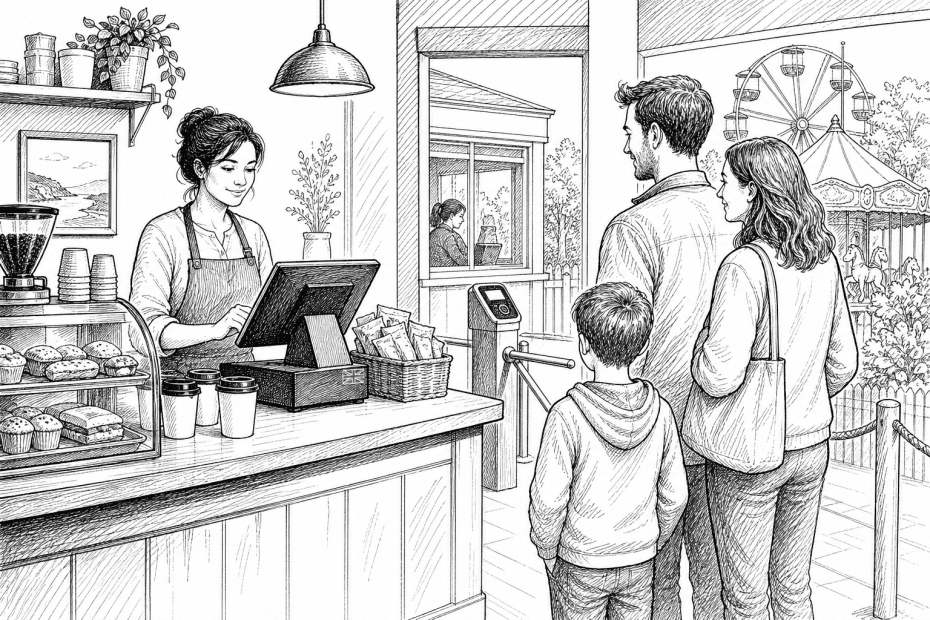
A temporary VAT cut on family attractions and children’s meals has started for the school summer holiday period, creating a short operational window for hospitality, leisure and visitor-economy businesses to decide whether they will pass on savings, hold prices, or use the change in another way.
The measure reduces VAT from 20% to 5% on selected family tickets and children’s meals from 25 June until 1 September. The BBC reports that it covers children’s meals served in restaurants, children’s and family tickets for cinemas, theatres, concerts, shows and exhibitions, as well as attractions such as adventure parks, nature reserves and wildlife parks. The scheme also includes free bus travel for children aged five to 15 in England during August.
For small firms, the headline is not simply “prices down”. The more practical question is whether the temporary cut can be implemented cleanly without creating confusion at tills, on menus, in booking systems or in VAT records.
Why this matters for SMEs
Leisure venues, cafes, restaurants, pubs, family attractions and local tourism businesses are entering one of the busiest trading periods of the year. A lower VAT rate can support demand if customers see a clear saving, but the timing also creates admin work just as seasonal staffing, stock planning and holiday rotas are already under pressure.
Some larger chains have said they will pass on savings through cheaper meals. Smaller businesses may take a more mixed approach depending on their margins, their systems and how much of their sales fall inside the temporary rules.
That choice matters. Customers may assume the full tax saving should appear at the checkout, while businesses may be weighing the cost of changing menus, retraining staff, altering online booking pages and then reversing those changes after 1 September. A small cafe, soft-play venue or independent cinema has less room for error than a national operator with in-house finance and technology teams.
The BBC quoted London accountant Laughton Ross, whose clients include local hospitality businesses, warning that firms may need to reprogramme till and accounting systems, with additional operational and financial risk for a change that lasts only a few weeks. That is the kind of hidden cost small firms should treat seriously.
What owners should check now
First, confirm exactly which sales are eligible. Do not assume every product, ticket or meal sold to a family qualifies. Mixed orders, bundled offers, adult tickets, memberships, vouchers and online bookings may need careful handling. Where the rules are unclear, take advice from an accountant or VAT specialist rather than relying on a competitor’s approach.
Second, check whether your point-of-sale, booking and accounting systems can apply the temporary rate accurately. A manual workaround might be fine for a very small number of sales, but it can quickly become risky in a busy venue. Businesses that already have tight finance processes, such as those preparing for Making Tax Digital and stronger record keeping, will be better placed to show what happened later.
Third, decide how to communicate the change. If prices are reduced, make the offer clear without overpromising. If only some items are cheaper, staff need a simple explanation they can repeat consistently. If prices are not changing, owners should be ready for questions from customers who have seen national headlines about a VAT cut.
Fourth, protect cash flow. A short-term price change can lift demand, but it can also reduce takings per transaction if the saving is passed on in full. For firms already dealing with wage, rent, food, energy or insurance pressure, the decision should sit alongside wider margin planning. The same discipline applies as with other cost pressures, from transport bills to slower customer spending.
A short window, not a strategy
The temporary cut may help some venues attract families over the summer, especially where the saving is visible and easy to understand. But it is unlikely to solve deeper issues in hospitality and leisure: weak consumer confidence, high fixed costs, seasonal hiring pressure and the constant need to keep prices competitive.
For small businesses, the best response is practical rather than political. Check eligibility, update systems, brief staff, keep records and review the impact after the first busy weekend. If the change brings extra footfall, it may be worth pairing it with simple add-ons such as advance bookings, loyalty offers or clear family bundles. If the admin burden outweighs the benefit, document the decision and avoid rushed changes that could create VAT errors later.
The summer VAT cut is temporary, but the lessons are familiar: clear pricing, clean records and careful cash-flow planning matter most when policy changes arrive quickly.