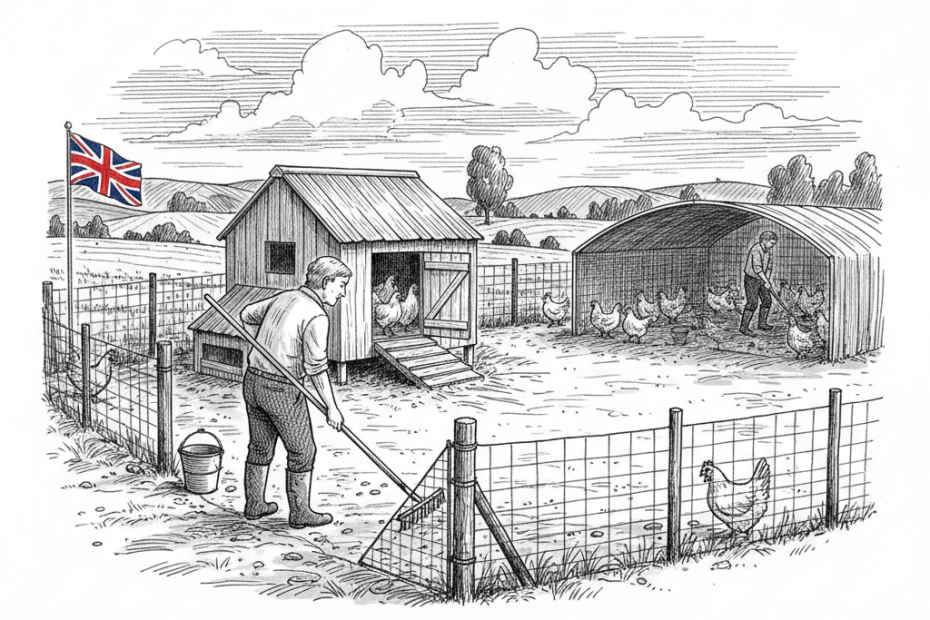
Small poultry businesses in England and Wales have been given a date to work towards. The government has confirmed that mandatory bird flu housing measures will be lifted from Thursday 9 April, meaning birds can go back outside unless the keeper is in a Protection Zone or a Captive Bird Monitoring (Controlled) Zone.
For large producers that matters, but it also matters for the smaller end of the market: family-run egg businesses, farm shops with poultry units, mixed farms, rare-breed keepers selling locally, and smallholders whose birds support wider rural income. After months of keeping birds housed, the rule change offers some relief, but it does not mean the risk has vanished.
What has changed
Defra says the latest risk assessment shows the threat from highly pathogenic avian influenza has reduced enough for the housing measures to end in England and Wales on 9 April. In practical terms, that means keepers will no longer be legally required to keep poultry and other captive birds indoors across the board.
However, the wider Avian Influenza Prevention Zone remains in place. That means mandatory biosecurity rules still apply, and some premises will continue to face tighter restrictions if they are inside a current disease-control zone. Bird gatherings such as fairs and markets also still need the right licence arrangements.
Why it matters for small businesses
For many small operators, housing birds for long periods is expensive, awkward and stressful. It can mean more work, more cleaning, more pressure on welfare and more hassle for businesses that trade partly on free-range credentials or direct local sales. Letting birds back out can ease some of that strain, but only if it is handled carefully.
There is also a commercial angle. Some small producers have had to explain to customers why free-range eggs were temporarily affected by housing rules, while others have had to manage extra feed, bedding and labour costs. At a time when many owners are already dealing with cautious demand and tight margins across the wider economy, any operational change can make a difference.
That broader pressure is one reason many firms are still keeping a close eye on the bigger picture of slower UK growth and customer caution, even when the immediate issue is farm-level regulation.
What poultry SMEs should do before 9 April
The main message from the guidance is simple: use the next few days to prepare outdoor areas rather than opening everything up at once.
- Check whether your premises is in a disease-control zone: if it is, the housing rules may still apply even after 9 April.
- Clean and disinfect hard surfaces: yards, access points and equipment should be treated before birds return outside.
- Deal with contaminated ground risks: remove feathers, droppings and any debris, and fence off standing water or ponds where wild birds may have gathered.
- Review wild bird deterrents: if deterrents or barriers slipped over the winter, now is the time to restore them.
- Reintroduce birds gradually if needed: after months indoors, some flocks may need a slower transition for welfare reasons.
- Keep biosecurity routines tight: disinfect footwear, clothing, vehicles and equipment before and after contact with birds.
That last point matters most. The housing order may be ending, but Defra and the veterinary authorities are still stressing strict hygiene and vigilance. In other words, this is not a return to business as usual overnight.
What to tell customers
If your business sells eggs, poultry products or farm-shop goods directly, this is a good moment for a short customer update. A plain explanation that restrictions are easing, but disease controls are still in force, helps reassure buyers without overpromising. For small local brands, clear communication often matters just as much as the operational change itself.
It may also be worth reviewing packaging, point-of-sale wording and website copy if you changed any wording during the housing period. Small businesses should make sure what they say publicly matches the current rules and the real position on the ground.
The practical takeaway
The lifting of housing measures on 9 April is good news for many small poultry businesses in England and Wales, but it is best seen as a managed step rather than a full reset. The legal requirement to house birds is easing, not the need for care.
For SMEs, the smart move is to spend the next few days checking zones, cleaning ranges, tightening biosecurity and planning how to let birds out safely. Businesses that prepare properly should be in a much better position to benefit from the change without creating new welfare or compliance problems.


