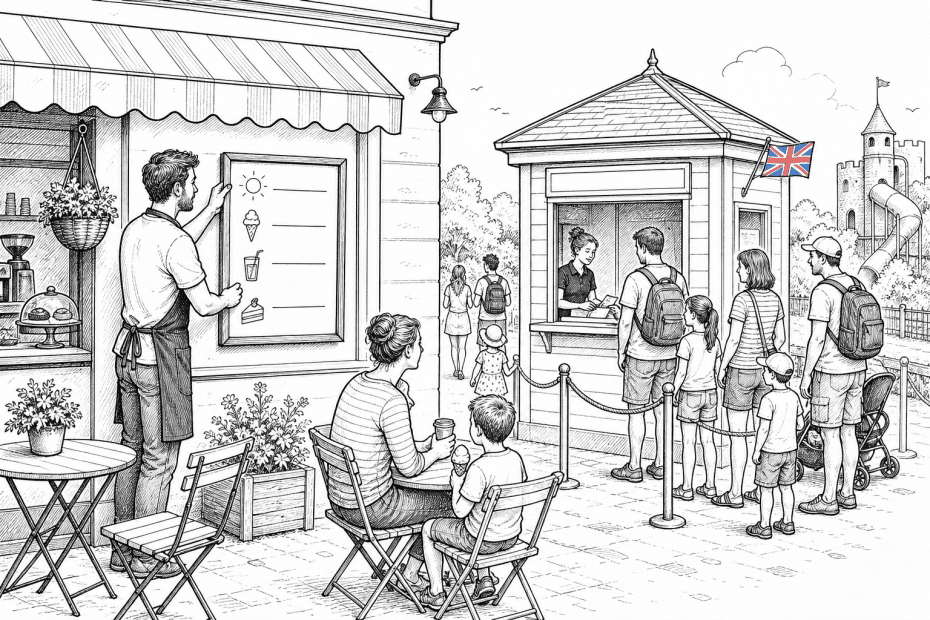
A temporary VAT cut on eligible family days out and children’s meals has gone live across the UK, giving small hospitality, leisure and visitor economy firms a short summer window to win extra trade.
The government’s Great British Summer Savings scheme reduces VAT from 20% to 5% on selected activities from 25 June. The eligible areas include children’s menu meals served in restaurants for consumption on the premises, children’s and family tickets for cinemas, theatres, concerts, shows and exhibitions, and admission to attractions such as amusement parks, fairs, museums, zoos, soft play centres, circuses, adventure parks, nature reserves, wildlife parks and observation attractions.
The measure is aimed at easing summer costs for families, but it also matters for small businesses because it lands at the busiest trading period for many cafes, pubs, soft play centres, cinemas, activity operators and local attractions. The potential upside is straightforward: sharper prices may bring more visits, more bookings and more add-on sales.
The operational side is less simple. Businesses that want to take part need to make sure the right products are identified, prices are updated clearly, till and accounting systems are adjusted, and staff know what the business is doing at the point of sale. The scheme is temporary, so any changes will also need to be reversed when it ends.
Why this matters for SMEs
For larger chains, changing prices and tax codes may be a central systems job. For smaller firms, it can mean calling a software provider, checking menu design, briefing seasonal staff and deciding whether the VAT saving is passed on in full, used for a promotion, or partly absorbed to protect margins.
That decision should be made deliberately. Passing on the reduction may be the clearest message for customers, especially where families are actively comparing the cost of days out. But small firms also need to understand their own numbers. A cheaper ticket or kids’ meal is only helpful if it brings profitable footfall or supports wider spending on drinks, snacks, merchandise, activities or repeat visits.
The government says major names including Picturehouse, Everyman Cinemas, Vue, Butlin’s, Wetherspoons, Shepherd Neame pubs, McDonald’s, KFC and Burger King have committed to passing on savings, while trade groups including the British Chambers of Commerce, the Federation of Small Businesses and UKHospitality have backed the campaign. That public momentum may increase customer expectations, even for independents that are still working through the detail.
What small firms should check first
The first job is eligibility. Owners should check which items or tickets are covered and which are not, rather than applying the lower rate too widely. The categories are specific, and mixed businesses may have both eligible and non-eligible sales. A cafe attached to an attraction, for example, may need different treatment for children’s meals, adult meals, general retail, event tickets and add-ons.
The second job is systems. If the business uses an electronic point-of-sale platform, the relevant VAT codes and prices should be updated before the change is advertised. If menus, signs or booking pages are changed, the wording needs to be clear enough for staff and customers to understand. Businesses should keep a note of what changed and when, so the accounting record is clean when the temporary period ends.
Cash flow is also worth a quick review. A busy summer can still be tight if lower prices reduce cash coming in before extra volume arrives. Firms should think through staffing, stock, weather risk and the cost of changing menus or printed material. Where the saving is used as a promotion, it should be tracked like any other offer.
The customer message
The best message for most small firms will be practical and local: what is cheaper, when it applies and how families can book or visit. Avoid overcomplicating the explanation at the till. A simple website note, booking-page update or social post may be enough if the pricing itself is clear.
Firms should also avoid implying that every product is cheaper if only part of the offer qualifies. That matters for trust, and it matters if staff are asked awkward questions during a busy service. A short internal note for employees can prevent confusion and keep the customer conversation focused on the visit rather than the tax mechanics.
The scheme may be especially useful for businesses that can package a day out around a covered activity: a soft play session with a children’s meal, a museum visit with a family ticket, or an attraction admission supported by cafe sales. The strongest offers will be easy to understand and easy to buy.
What to watch next
The government says it plans to launch a Great British Summer Savings deal finder, with businesses able to register to be featured. For small attractions and hospitality operators, that could be a useful extra marketing channel if the listing brings local families who are already looking for summer offers.
The main risk is treating the VAT cut as a quick marketing line without doing the admin. SMEs should confirm eligibility, update systems carefully, keep records, brief staff and plan the switch back when the temporary period ends. Done well, the measure could support a stronger summer. Done casually, it could create pricing confusion and accounting clean-up work later.
For now, the practical takeaway is to move quickly but carefully. If your business sells eligible family tickets, children’s meals or attraction admissions, decide the customer offer, make the system changes, and tell customers in plain English before the busiest school holiday weeks arrive.
Sources
Sources: HM Treasury announcement, 25 June 2026; BBC News report, 25 June 2026.