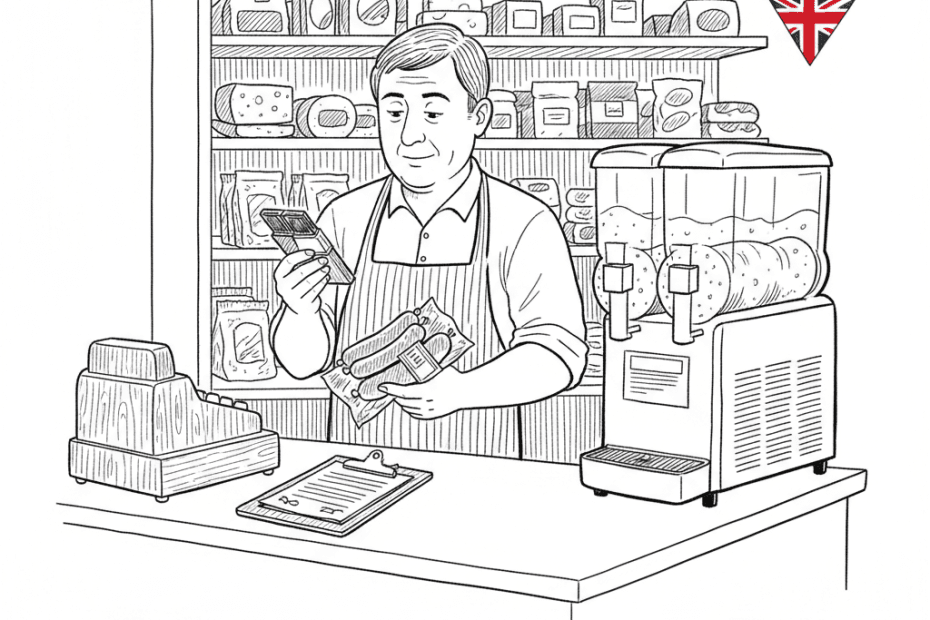
The Food Standards Agency has published results from its sixth annual retail surveillance survey, and the findings are a useful warning for small food retailers, convenience stores, market traders and online sellers.
The survey was targeted at areas where the regulator already suspected potential problems. It is not a verdict on the whole UK food retail sector. But it does show the sort of issues that can quickly become a compliance, customer trust and reputational problem for smaller businesses that rely on suppliers, importers and fast-moving trends.
Between July and December 2025, the FSA sampled 845 products from national supermarkets, independent retailers and online sellers. Most products tested were found to be safe and authentic, but the agency said it had taken action after failures involving Dubai-style chocolate, goat meat and slush-ice drinks.
What the FSA found
The clearest warning came from Dubai-style chocolate. According to the FSA, only one of 45 samples passed every test and labelling requirement. Labelling issues were found in 42 samples, including incorrect or missing use-by and best-before dates, allergens not clearly highlighted, ingredients not listed in the correct order and missing UK importer details.
For retailers, the important lesson is that viral products can carry very ordinary compliance risks. A product may look professionally packaged, arrive through a regular wholesale channel and sell quickly, while still leaving the shop exposed if the label is incomplete or allergens are not clear.
The survey also raised authenticity concerns around goat meat. Of 40 samples tested, 20 contained only sheep, one contained a mix of sheep and goat, and one was found to be wholly deer. The FSA said it worked with the National Food Crime Unit to alert local authorities and businesses after the results emerged.
Slush-ice drinks were another area of concern. The agency said the survey found continuing issues in a small number of products, particularly around glycerol levels and the use of glycerol warning posters in shops. The FSA published revised glycerol guidance in July 2025 and said further sampling and research are planned this summer.
Why this matters for small businesses
Large chains usually have central technical teams, supplier approval processes and product databases. Smaller retailers often have less formal systems, especially where a product is seasonal, imported, bought through a cash-and-carry, or added quickly because customers are asking for it.
That does not remove the risk. If a product has incorrect allergen information, unclear dates, misleading meat descriptions or missing importer details, the issue can land at shop level. Local authority follow-up, product withdrawals, customer complaints and social media attention can all take time and money away from the business.
The FSA’s director of policy, Rebecca Sudworth, said consumer safety is the agency’s biggest priority and that the findings came from a targeted survey focused on areas of suspected non-compliance. She also said such evidence-based work helps the regulator take informed steps to protect public health.
Checks worth doing now
Small retailers do not need to panic, but the survey is a good prompt to tighten basic product checks. Review fast-selling trend products, imported confectionery, chilled or frozen meat, and slush-ice drinks first. Make sure labels show allergens clearly, dates are present and sensible, ingredients are listed properly, and UK importer or responsible business details are included where required.
It is also worth checking that staff know where warning notices should be displayed, especially for slush-ice drinks, and that supplier paperwork is easy to find if a local authority asks questions. Where a product description relies on a specific meat species, retailers should be confident that the supplier can back it up.
For online sellers, the same discipline applies before listing a product. Product pages should not hide or omit key label information, and marketplaces should not become a shortcut around checks that would be expected in a physical shop.
The practical takeaway is simple: trending food lines can be profitable, but they should not bypass normal due diligence. A short label and supplier check before a product reaches the shelf is far cheaper than dealing with a recall, enforcement query or avoidable customer harm later.
Source: Food Standards Agency retail surveillance survey announcement.