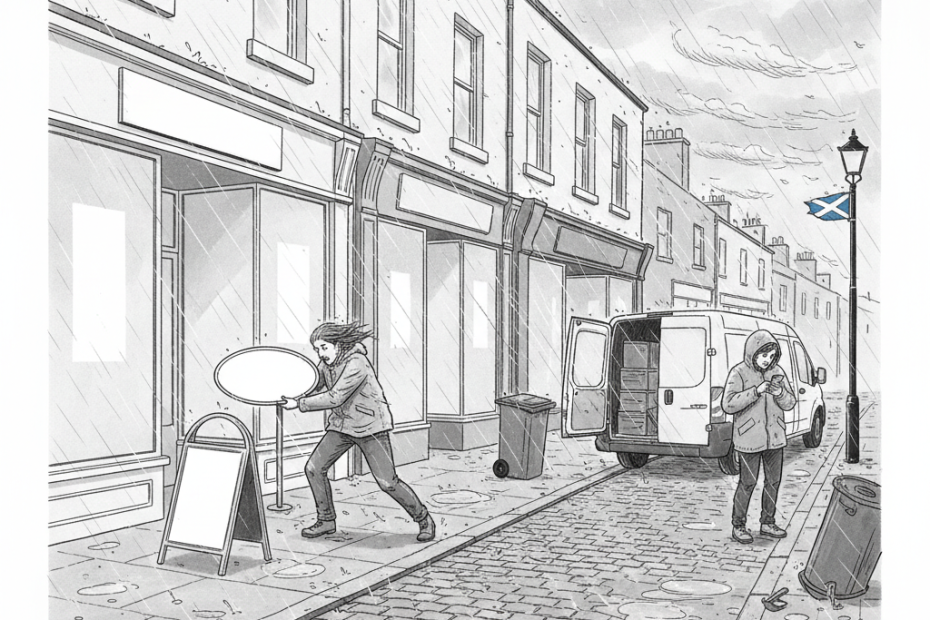
Scottish small businesses heading into the Easter weekend may need to plan for a rougher few days than usual. Storm Dave is expected to bring strong winds across much of Scotland, with some exposed areas facing gusts of 60 to 70mph and a small chance of 80 to 90mph for a short period. Snow is also forecast for parts of the north-west, especially on higher ground.
For many SMEs, that is not just a weather story. It is a trading, staffing and delivery story too. Cafés, shops, trades, tourism firms, market operators and hospitality venues can all feel the knock-on effects when travel warnings, ferry disruption, flight delays and power issues start to build at the same time.
What is happening
According to the Met Office, Storm Dave is set to deepen rapidly on Saturday before moving across northern parts of the UK into Sunday. Scotland is expected to see the strongest conditions, with yellow wind warnings covering the country and a separate yellow snow warning for north-west Scotland from 15:00 on Saturday to 03:00 on Sunday.
The BBC also reported that wind gusts could reach around 80mph in parts of the Western Isles and Skye, while ferry operator CalMac has already warned of disruption and Highlands and Islands Airports Ltd has said flights could be affected. Police Scotland has urged people to delay journeys if possible and said drivers of high-sided vehicles should take particular care.
Why it matters for small businesses
Easter weekend can be an important trading window, especially for hospitality, tourism and local retail. If customers decide to stay closer to home, bookings can soften, footfall can drop and last-minute cancellations can rise. For businesses in island and rural communities, transport disruption can also delay stock, staff and customer travel all at once.
Trades and mobile service businesses may face another problem: jobs can still be on the books, but reaching them safely becomes harder. Vans, tools and materials all cost money to move, and extra weather-related disruption adds to the wider pressure many firms already feel from running costs. That is one reason some owners are still watching broader cost issues such as fuel duty uncertainty alongside day-to-day operational risks.
There is also the staffing angle. If schools are closed, ferries are delayed or roads become unsafe, rotas can quickly unravel. Small employers often have less spare cover than larger chains, so even one or two missed shifts can create problems.
What Scottish SMEs can do now
For many businesses, the sensible move is not panic but preparation. A few practical checks made before conditions worsen could protect both revenue and safety:
- Review weekend staffing early: check who may struggle to travel and agree backup plans now rather than on the day.
- Secure outdoor items: signage, seating, bins, stock cages and temporary covers can become hazards in strong winds.
- Contact customers before they contact you: if you run appointments, deliveries or bookings, send a short update explaining your contingency plan.
- Check supplier and courier dependencies: if fresh stock or timed deliveries matter, ask this morning whether schedules are likely to move.
- Prepare for power or connectivity issues: charge card machines, phones and laptops, and make sure key phone numbers are easy to access.
- Keep social updates simple: one clear post on opening times, cancellations or delays is better than scattered replies across multiple channels.
If the worst of the disruption does materialise, clear communication will matter as much as operational resilience. Customers are usually understanding when businesses are upfront, specific and quick to update.
The practical takeaway
Storm Dave may clear by late Sunday, but for Scottish SMEs the real issue is whether the next 24 to 36 hours interrupt a busy trading window. Businesses that rely on travel, outdoor trading, tourism or weekend footfall have the most to lose, particularly in exposed and rural areas.
This is also a reminder that resilience for small firms is rarely about one dramatic event. It is about how weather, transport, staffing and costs stack up together. Many business owners are already operating in a cautious economy, as seen in the recent picture of flat UK growth, so even short disruptions can matter.
For now, the sensible approach is straightforward: check the local forecast, make a weekend plan, warn customers early and do not assume normal travel conditions will hold.


