HMRC has quietly posted a practical warning that could matter for thousands of small firms doing VAT checks next week.
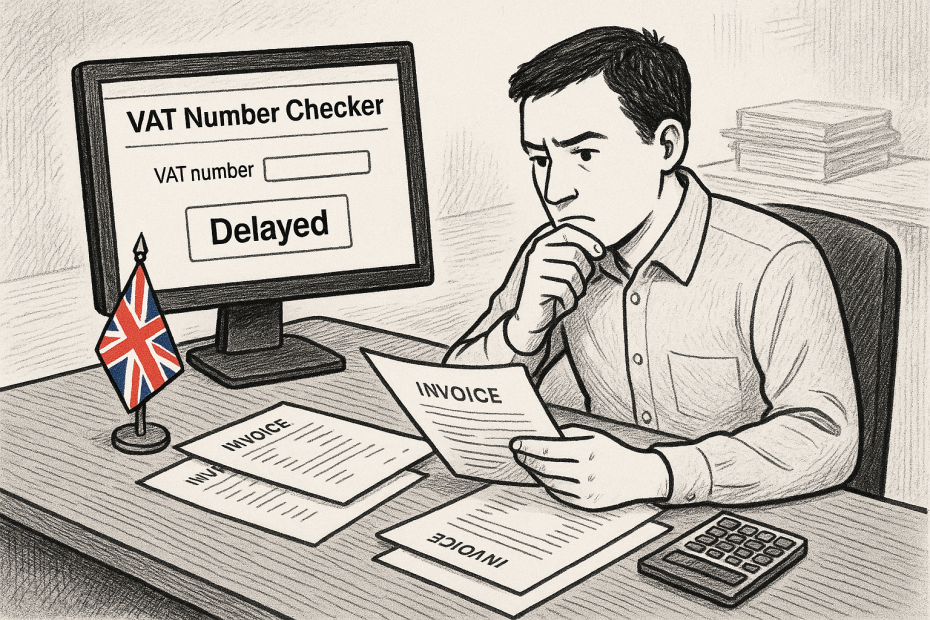
From 9am on Monday 16 March until 5pm on Friday 20 March 2026, new VAT registrations may not appear on the government’s Check a UK VAT number service. HMRC says businesses will still be able to use the service to check UK VAT numbers during that period, but the warning matters because some recently registered firms may not show up when customers, suppliers or finance teams try to verify them.
That may sound like a narrow admin issue. It is not. For wholesalers, contractors, trades, agencies and other B2B SMEs, VAT checks are often part of day-to-day credit control, onboarding and fraud prevention. If a legitimate new customer or supplier does not appear in the checker, it can slow down invoicing, delay work starting or create arguments over whether VAT should be charged.
What HMRC has actually said
The update was added to HMRC’s service availability page on 13 March. The key point is simple: new VAT registrations may not appear in the online checker for five working days from Monday morning. HMRC has not said the whole service is down. It has said the service remains available, but newer registrations may not show in the results.
The standard checker is used to confirm whether a UK VAT number is valid and to view the name and address attached to it. VAT-registered businesses can also use it as evidence of when they checked a VAT number.
Why this matters to small businesses
Many SMEs use VAT checks as a simple sense-check before raising invoices, agreeing supply, setting up a new account or processing a subcontractor. In some sectors, that check is part of internal controls rather than a one-off nicety.
If you are dealing with a newly registered business next week, an unsuccessful search may not automatically mean something is wrong. It may simply mean the HMRC checker has not yet caught up.
That is especially relevant for firms under margin pressure, where one admin delay can quickly turn into a cash-flow nuisance. We have already looked at how fragile back-office processes can become when systems wobble in our piece on the Lloyds, Halifax and Bank of Scotland app glitch. This is a different problem, but the same general lesson applies: when a key verification tool is not fully reliable, businesses need a workable fallback.
Where the pinch points could show up
One obvious risk is delayed onboarding. A bookkeeper or office manager may be told not to set up a supplier until the VAT number checks out. A cautious customer may also hold back on paying an invoice with VAT if the seller’s number does not appear yet.
There is also a fraud angle. Small firms are rightly told to be careful about invoice fraud and bogus suppliers. The trouble next week is that a genuine new registration and a suspicious one may look similar at first glance if the online tool cannot yet confirm the details.
Construction firms and other businesses dealing with sector-specific VAT rules may want to be particularly careful about documentation. The domestic reverse charge rules, for example, can already make invoicing more complicated in some transactions. When a verification tool is temporarily incomplete, clear records matter even more.
What SMEs should do this week
First, warn whoever handles finance admin, estimates, supplier setup or invoicing that the checker may not show some new registrations between 16 and 20 March. That alone could prevent a lot of unnecessary panic.
Second, if a new customer or supplier says they have only recently registered for VAT, do not assume a failed search settles the matter. Ask for supporting paperwork and keep a clear note of what was provided and when. If you are VAT-registered yourself, keep evidence of any checks you were able to carry out.
Third, think about whether any deals due to start next week depend on a fresh VAT registration appearing online. If they do, build in a little extra time rather than leaving everything to the last minute.
Finally, remember that good tax admin is mostly about keeping records and reducing avoidable mistakes. The same habit will matter as other HMRC reporting changes edge closer, including the wider preparation many firms are doing around Making Tax Digital for Income Tax.
The practical takeaway
HMRC’s VAT checker is not going offline next week, but it may not fully reflect brand-new VAT registrations. For small businesses, that means one thing: treat missing results with care, not panic.
If you are onboarding a newly registered customer or supplier between Monday and Friday, expect a little extra friction and make sure your paperwork is tidy. This is a small operational warning, but the sort of small warning that can save a lot of hassle if you spot it early.
Sources
- HMRC, Check a UK VAT number: service availability and issues, updated 13 March 2026
- GOV.UK, Check a UK VAT number, accessed 15 March 2026