
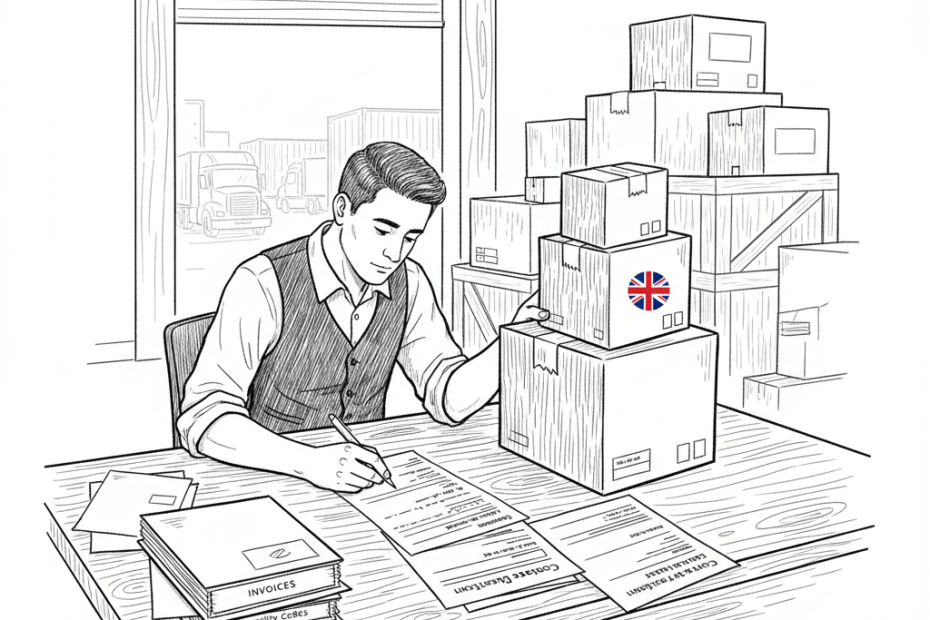
Small firms that bring goods into the UK have been given a useful reminder of how many checks need to happen before stock reaches the warehouse, shop floor or customer. HMRC’s updated import guidance sets out the sequence businesses should work through, from checking whether the route applies to them through to keeping records after the goods have cleared customs.
For larger importers, those steps may sit with an internal finance, logistics or compliance team. For many SMEs, they sit with the owner, a finance manager, an operations lead or an external customs agent. That makes the guidance worth revisiting when supplier arrangements change, when a new product line is added, or when a business starts buying from a country it has not used before.
What the guidance covers
The GOV.UK checklist applies to businesses moving goods permanently into Great Britain from outside the UK, and to Northern Ireland from outside both the UK and the EU. It also points out that different processes can apply for Great Britain to Northern Ireland movements, goods arriving by post, temporary imports, rejected goods returning to the UK, and goods brought in personally for business use.
The first practical check is whether the business has the right Economic Operators Registration and Identification number. An EORI number starting with GB is needed to import into England, Scotland or Wales. Firms moving goods to or from Northern Ireland may need an XI EORI number instead.
There is also a fulfilment angle. If a UK business stores goods for sellers established outside the UK, it may need to consider the Fulfilment House Due Diligence Scheme. HMRC’s separate scheme guidance says some storage businesses must be approved before trading, and that penalties can apply if they do not register at the right time.
Why it matters for small businesses
Import admin is easy to treat as a back-office issue until something gets delayed. A missing EORI number, the wrong commodity code, a licence requirement that was not spotted, or unclear responsibility between a supplier and a customs agent can all create cost and timing problems. For a small firm, a delayed container or held shipment can quickly turn into empty shelves, late customer orders or awkward cash flow.
The guidance makes clear that firms need to decide who will make the customs declarations and arrange transport. Most importers use a transporter or customs agent, but outsourcing the work does not remove the need to understand what information must be provided. Commodity codes, goods values, certificates, licences and records still need to be accurate enough for the person handling the declaration to do the job properly.
That links closely to cost planning. The commodity code helps determine the rate of duty and whether an import licence is needed. The value declared for goods helps calculate duty and VAT. Some goods may qualify for lower or delayed Customs Duty, but those options need to be checked before assumptions are built into prices or margins.
What to check now
Any small firm importing stock should keep a short internal checklist for each product or supplier route. At minimum, that should cover the EORI number used, who is responsible for the declaration, the commodity code, the value basis, any licences or certificates, who holds the commercial invoice, and whether import VAT evidence such as a C79 certificate is available for accounting records.
Businesses should also check whether the supplier can export to the UK and whether any country-specific paperwork is needed before the goods leave. That is especially important when a firm is testing a new overseas supplier, buying from a marketplace seller, or switching from a distributor to direct import.
For SMEs already watching trade opportunities, this is the operational half of the same story. New trade deals and lower duty routes only help if the business can prove the goods qualify and move them through the border cleanly. BritishSME recently covered what small exporters and importers should prepare around the UK-India trade deal; the import checklist is where that kind of planning becomes day-to-day admin.
There is a cash flow point too. Import VAT, duty and freight costs can land before the goods have been sold. Firms should make sure those costs are reflected in pricing and working capital forecasts, particularly if they are ordering seasonal stock or committing to larger batches. Where paperwork delays might affect incoming goods, the same discipline that helps with overdue invoices and working capital pressure can help keep purchasing decisions grounded.
The practical takeaway
The main message is not that every small firm needs to become a customs specialist. It is that import responsibility needs an owner inside the business, even where a customs agent handles the declaration. Someone should know which goods are coming in, which route applies, what evidence is needed, and where the records will be stored.
Before placing the next overseas order, SMEs should check the GOV.UK steps against their own process and close any gaps while there is still time to fix them. It is far easier to confirm a commodity code, licence need or record-keeping requirement before goods are shipped than after they are waiting at the border.
Sources: GOV.UK import goods into the UK step-by-step guidance; HMRC Fulfilment House Due Diligence Scheme guidance.