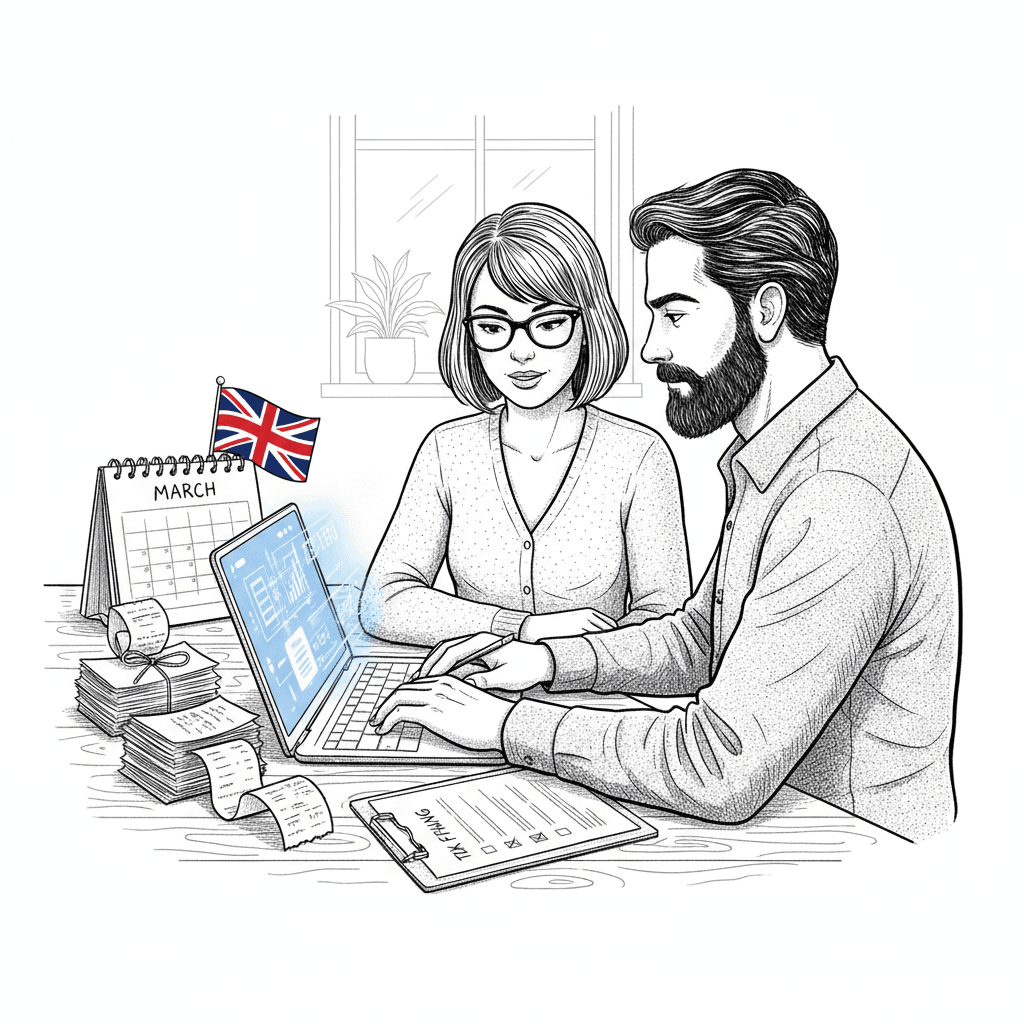
HMRC has refreshed its Making Tax Digital for Income Tax guidance just days before the new rules start on 6 April, which makes this a live issue now for higher-earning sole traders and landlords rather than another tax change to park for later.
For many small operators, the immediate question is not whether the policy exists but whether they are actually ready. If your 2024 to 2025 tax return showed more than £50,000 of qualifying income from self-employment, property, or both, HMRC says you must join from 6 April 2026. That means using compatible software, keeping digital records and sending quarterly updates instead of relying on a once-a-year rush. If you still need the broader background, BritishSME has already covered what UK small businesses should do now on Making Tax Digital for Income Tax.
What HMRC has updated
The practical change this week is not a brand-new tax announcement. It is a sharpened set of HMRC pages explaining what businesses need to do before they start, plus updated software guidance published on 2 April. HMRC is pushing people to choose software before signing up and to make sure that software actually fits how the business operates.
That matters because “compatible software” is not just a box-ticking phrase. The software needs to let a business create and store digital records for self-employment and property income, send quarterly updates to HMRC, and then complete the year-end tax return with any other income sources added in. For a sole trader with one simple business, that may be straightforward. For someone juggling freelance income, a small rental property and VAT, it can get messy quite quickly.
Who needs to act first
The first wave starts with people whose qualifying income was more than £50,000 on their 2024 to 2025 return. HMRC then plans to extend the regime to those over £30,000 from April 2027 and over £20,000 from April 2028.
For SMEs, that means the most exposed group right now is not necessarily bigger limited companies. It is sole traders, landlords and small owner-managed businesses where the owner still handles a lot of the admin personally. Builders, tradespeople, consultants, shop owners with side property income and self-employed professionals are all in the zone if their turnover crosses the threshold.
HMRC also makes an important point about qualifying income: it is based on turnover before expenses from self-employment and property income on the previous year’s tax return. That detail matters because some business owners may assume their profit is the deciding number when it is not.
Why software choice matters more than it sounds
A lot of smaller firms will be tempted to buy the cheapest tool that says it works with Making Tax Digital and hope for the best. That could be a false economy.
HMRC’s updated guidance makes clear that some software creates full digital records, while other products act more like bridging tools for spreadsheets or existing records. Some businesses may need one product. Others may need more than one, but HMRC says you can only use one product for each separate submission. In plain English, you need a setup that fits your record-keeping and can still get the right information to HMRC without creating a tangle of duplicate data and manual work.
That is especially relevant for smaller firms already trying to manage cost pressure. A rushed switch in April can mean wasted software spend, broken processes, or a scramble with an accountant later. It is also worth checking whether any current VAT software already covers Making Tax Digital for Income Tax, because some businesses may be able to avoid paying for overlapping systems.
The practical deadlines small businesses should note
HMRC says businesses using standard update periods need to create digital records from 6 April 2026. Those using calendar update periods and a 31 March accounting date need to start from 1 April 2026. The first quarterly update is due by 7 August 2026, followed by 7 November 2026, 7 February 2027 and 7 May 2027. The tax return itself is still due by 31 January after the end of the tax year.
There is one small relief in the guidance. HMRC says it will not apply penalty points for late quarterly updates during the 2026 to 2027 tax year, although updates still need to be filed before a tax return can be submitted. That should not be mistaken for a free pass. Businesses that start late, use the wrong software or keep poor records can still turn routine tax admin into a year-long headache.
What SMEs should do now
First, check whether the threshold catches you based on your 2024 to 2025 return. Second, work out whether your records live in bookkeeping software already or whether you are still relying on spreadsheets and paper. Third, test whether your existing provider supports Making Tax Digital for Income Tax fully, not just in marketing language. Fourth, if an accountant or bookkeeper helps you, make sure both sides understand who is doing what before the first quarterly deadline arrives.
The big takeaway is simple: the start date is close enough now that this stops being a future compliance story and becomes an operations story. For sole traders and landlords over the threshold, the safest move is to sort the software and record-keeping process immediately, while there is still time to fix mistakes before the first quarterly update is due.
Sources
- GOV.UK, Choose the right software for Making Tax Digital for Income Tax, last updated 2 April 2026
- GOV.UK, Use Making Tax Digital for Income Tax: Before you use this guide, accessed 3 April 2026
- GOV.UK, Use Making Tax Digital for Income Tax, accessed 3 April 2026