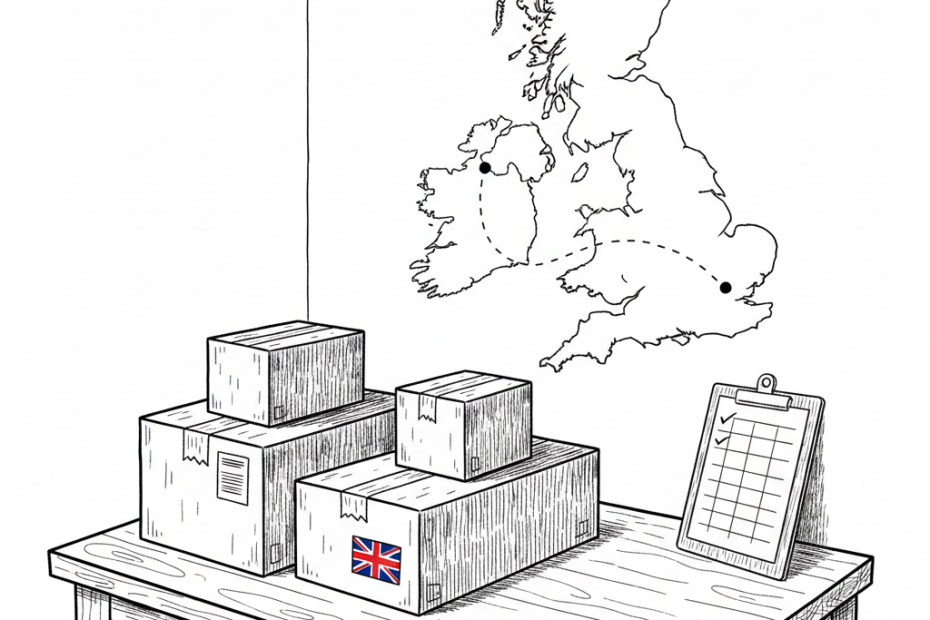
HMRC has added two new guidance documents for businesses involved in business-to-business parcel movements from Great Britain to Northern Ireland, giving small firms a useful reason to check their shipping process before the next parcel leaves the warehouse.
The update sits within the government’s wider Windsor Framework resources for moving goods from Great Britain to Northern Ireland. The GOV.UK page was last updated on 8 June 2026 and now includes separate guidance for GB businesses and Northern Ireland businesses on B2B parcel arrangements intended to support correct duty charges.
For small firms, the point is not that every parcel will suddenly need a new process. It is that the rules around business parcels, freight movements, duty treatment and trader information can be easy to leave to couriers, marketplaces or admin staff until something goes wrong. A missed detail can mean delays, unexpected duty questions, unhappy customers or avoidable back-and-forth with a carrier.
What has changed?
HMRC’s latest update added two guidance documents titled “Great Britain to Northern Ireland business-to-business (B2B) parcel arrangements to ensure correct duty charges”, one aimed at GB businesses and one aimed at Northern Ireland businesses.
The same resource hub also links to checklists for B2B parcel movements and freight movements under the Windsor Framework, information for Trader Support Service users, information for businesses that are not using the Trader Support Service, and resources that can be shared with supply-chain partners in Northern Ireland.
That makes the page a practical starting point for owners and operations managers who need to know whether their current parcel process still matches official expectations.
Who should pay attention?
This is most relevant to small businesses that sell, repair, supply or transfer goods between Great Britain and Northern Ireland. That can include wholesalers, manufacturers, food and drink producers, engineering suppliers, ecommerce sellers, spare-parts firms and service businesses that send equipment or replacement items to business customers.
It may also matter to firms that rarely describe themselves as importers or exporters. A small supplier sending regular B2B parcels to Belfast, Derry/Londonderry or other Northern Ireland customers can still be caught by the practical paperwork and duty questions around the route.
Businesses that use third-party logistics providers should not assume the carrier has everything needed. The supplier may still need to provide accurate information about the goods, the recipient, the purpose of the movement and whether the movement fits a particular process.
Why it matters for SMEs
Small firms often feel border-process friction first in customer service rather than in policy language. A delayed parcel can mean a cancelled order, a missed installation, a production hold-up or a customer who no longer trusts the supplier’s delivery promise.
The latest HMRC resources are therefore worth treating as an operational checklist. If staff are still using notes created before the Windsor Framework parcel changes came into effect, or relying on informal carrier advice, this is a good moment to refresh the internal process.
There is also a cash-flow angle. The government says the new B2B parcel guidance is intended to help ensure correct duty charges. For smaller firms, even modest unexpected costs can eat into a tight margin when goods are shipped frequently or when the price was agreed before the duty treatment was checked.
What to check now
Start by identifying who in the business owns GB to Northern Ireland movements. In many SMEs, responsibility is split between sales, warehouse, accounts and a courier portal login. Someone should be accountable for checking the latest HMRC guidance and translating it into a short internal process.
Then review whether the business sends B2B parcels, freight, or both. The GOV.UK resource separates parcel and freight checklists, so the route and movement type matter. A small firm that ships both boxed parcels and palletised goods may need more than one checklist.
Next, check what information is captured before dispatch. Product descriptions, customer status, reason for movement, values, commodity information and scheme details can all affect how smoothly a parcel is handled. The aim is to avoid staff trying to work these things out after a shipment is already booked.
It is also worth checking whether the business uses the Trader Support Service, UK Internal Market Scheme arrangements, courier systems, marketplace fulfilment, or a mix. Where responsibilities are split across several tools or partners, document who does what.
Finally, tell affected customers what information they may need to provide. Northern Ireland business customers may need to understand why a GB supplier is asking for extra details, especially if previous deliveries felt simpler.
Link it to wider customs housekeeping
This update is another reminder that small firms moving goods across UK customs boundaries need simple internal routines, not just one-off fixes. Firms that also bring goods into the UK may find it useful to revisit our import checklist for small firms, especially if the same staff handle import paperwork and Northern Ireland dispatches.
For businesses with recent Northern Ireland duty questions, our earlier note on Northern Ireland import duty claims is also relevant, because it highlights how quickly deadlines and evidence requirements can matter once duty has been charged or queried.
The takeaway
HMRC’s 8 June update is not a reason for every SME to panic. It is a reason for any firm sending B2B parcels or freight from Great Britain to Northern Ireland to check that its process is current, written down and understood by the people booking shipments.
The lowest-risk move is simple: read the relevant GOV.UK guidance, compare it with the carrier and internal dispatch process, and fix any gaps before they show up as delayed parcels, surprise charges or customer complaints.
Sources
GOV.UK: Communications resources to help you move goods from Great Britain to Northern Ireland