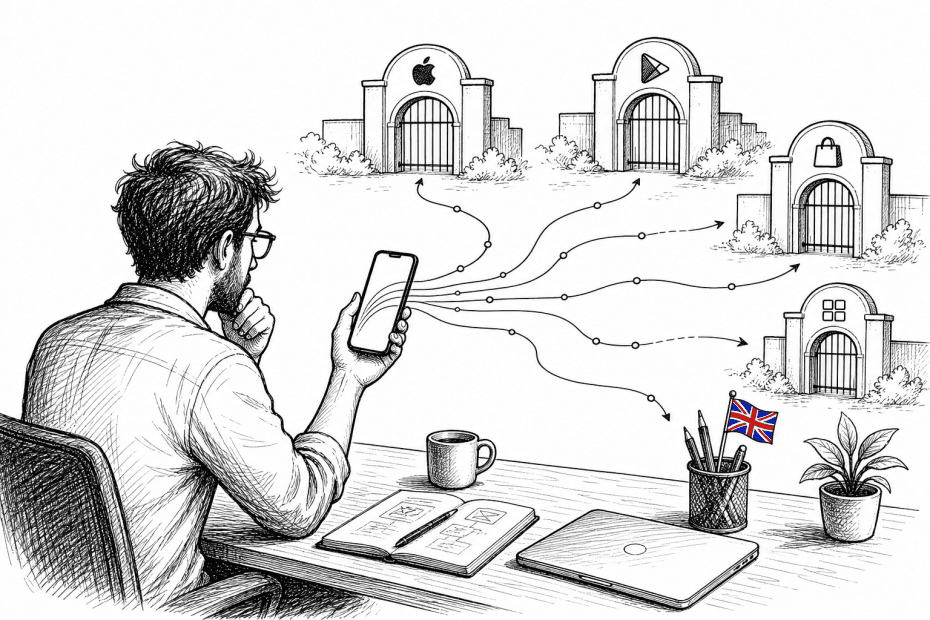
The Competition and Markets Authority is consulting on new requirements that could make it easier for UK app developers to point customers towards payment options outside Apple and Google’s mobile platforms.
The proposals matter for small software firms, subscription businesses, digital publishers, online services and fintechs that rely on mobile apps to reach customers. If adopted, the rules would give developers more room to communicate with users about off-platform offers and payments, while putting pressure on the fees charged by the largest app stores.
The CMA says Apple currently bans this kind of “steering” in the UK, while Google restricts it. Its proposed conduct requirements would allow developers to engage with users about other ways to pay or transact. The regulator is also consulting on principles intended to make any steering fees fair and reasonable, with an expectation that fees should be lower than current app store charges where justified by the evidence.
Why this matters to smaller firms
For a small app developer, the route to market is often narrow. Apple and Google control the main mobile ecosystems, and their rules can affect pricing, margins, customer relationships and how quickly a product can be improved. A business selling subscriptions, bookings, courses, digital content or software through an app may have limited room to explain cheaper or more flexible options elsewhere.
The CMA’s plan would not remove the need to comply with platform rules overnight. It is a consultation, not a final order. But it signals that the UK regulator wants app developers to have more direct commercial contact with their customers, including inside native apps. That could be useful for SMEs trying to reduce acquisition costs, test new bundles, or build a clearer relationship with users beyond the app store checkout.
There is also a cash-flow angle. App store charges can be a meaningful cost for smaller digital businesses, especially where margins are tight or where a firm is still investing heavily in product development. Any reduction in platform fees could be reinvested in hiring, support, security, product improvements or customer discounts.
Small firms should still be careful about assuming immediate savings. The details will matter, including the level of any new steering fees, how visible alternative payment links can be, and whether customer trust or conversion rates change when users are sent outside the app store environment.
NFC access could open another door
The CMA is also seeking views on a potential requirement linked to Apple’s near field communication functionality on iOS. NFC is the short-range technology used for contactless payments and other tap-based interactions.
The regulator says it has heard concerns from businesses that Apple’s fees and terms have prevented access to NFC functionality. It is considering how developers could be given access, including the technical method and the price charged for that access. The consultation on this point closes at 5pm on 21 July 2026.
For fintechs and payment innovators, this is more than a technical detail. Better NFC access could support new payment methods, digital ID products and other mobile services. For small businesses that take payments, a more competitive payment ecosystem could eventually mean more choice in the tools they use at the till, online and in customer apps.
What app-based SMEs should do now
Businesses with a mobile app should review how much of their revenue currently depends on Apple or Google in-app transactions, what fees they pay, and whether they have a clear customer journey for web-based payment or account management. They should also check whether their terms, marketing copy and support scripts would need updating if steering rules change.
Developers and fintechs may want to respond to the consultation if the outcome could affect their costs, product roadmap or customer communications. The steering consultation closes at 5pm on 28 July 2026. Evidence from smaller firms could be especially useful where the practical impact differs from that felt by larger platforms or well-funded app businesses.
This is also a reminder that digital operations are now a core business risk for many SMEs. Payment flows, app store rules and platform access can change quickly, just as banking and app outages can disrupt day-to-day trading. Firms that depend on digital platforms should keep contingency plans current, in the same way they would plan for payment visibility and account access issues.
The strongest practical move is to map the dependency now: where customers discover the app, how they pay, what fees apply, and what alternatives could be offered if the rules change. That will put small firms in a better position to respond quickly if the CMA moves from consultation to enforceable requirements later this year.