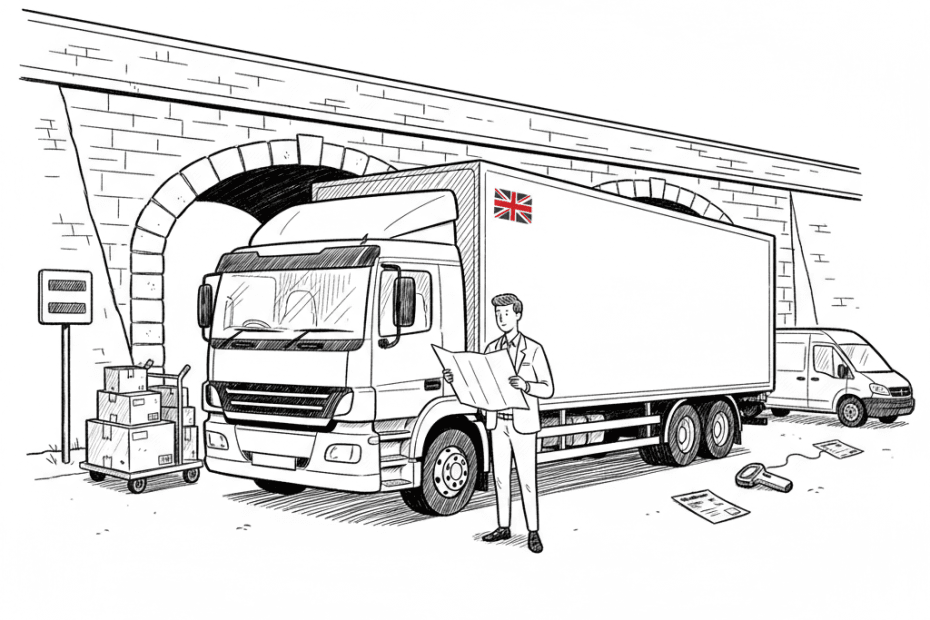
Bridge strikes are usually reported as a rail disruption story, but they should also be a practical warning for small firms that send goods, tools or equipment out on the road.
The BBC reported that there were 1,666 bridge strikes across Britain’s rail network between April 2024 and March 2025, citing Network Rail figures. The crashes cost the operator about GBP23m a year in repairs and can leave passengers delayed while engineers check whether a bridge is safe.
For SMEs, the risk is more direct than it may first appear. A single wrong turn by a lorry can damage a vehicle, stop a delivery, trigger insurance and repair costs, disrupt customers, block local roads and leave a firm dealing with reputational fallout. Even businesses that outsource haulage can still feel the commercial impact if goods arrive late or a job has to be rescheduled.
The BBC article highlighted the A5 in Hinckley, Leicestershire, as Britain’s most bashed bridge, and described Network Rail’s wider work to reduce incidents. It also quoted an experienced driver who said he had once stopped before a bridge, reversed a long distance and found another route rather than take the risk. That is the kind of decision that may feel costly in the moment but can prevent a much larger problem.
Network Rail’s own guidance and public campaigns have long stressed that drivers and operators should know vehicle height, plan routes carefully and avoid relying only on standard sat-nav instructions. That message matters for small employers because mixed vehicle use is common: one week a firm may be running a small van, the next it may hire a taller vehicle, tow equipment, use a box body, or send a subcontracted driver to a site with awkward access.
The first check is simple: make sure every vehicle’s travelling height is known, visible and current. That includes roof equipment, refrigeration units, ladders, trailers and any temporary load that changes the profile. If a driver is using a hire vehicle, the height displayed in the cab should be checked before the journey starts rather than assumed from previous experience.
Route planning is the second check. Firms with regular deliveries should identify known low bridges on common routes, especially around depots, customer sites, retail parks, industrial estates and rural shortcuts. Where possible, give drivers a preferred route rather than only a postcode. If a route involves a height limit, the job note should say so clearly.
Technology can help, but it should not be treated as the whole control. A sat-nav designed for cars may not account for a taller commercial vehicle. Fleet managers and owner-operators should use appropriate routing tools for the vehicle type, keep maps and device data updated, and still expect drivers to stop if signage or road conditions do not match the planned route.
There is also a contract angle. SMEs using external carriers should ask how they manage bridge-strike risk, particularly for high-value or time-critical deliveries. That can include driver briefing, vehicle-height records, route planning, insurance cover and incident reporting. If the carrier’s process is vague, the customer’s delivery promise may be more fragile than it looks.
Bridge strikes sit alongside wider transport cost pressures already facing smaller businesses. Earlier this year, BritishSME looked at transport costs and SME margins; avoidable road incidents are another way margins can be lost through disruption rather than through a supplier price rise.
The useful takeaway is to treat low bridges as a routine operating risk. Check vehicle heights, brief drivers, use vehicle-appropriate routing, record known hazards and make sure delivery partners can explain their controls. For a small firm, a few minutes of planning can be far cheaper than a damaged lorry, a missed customer deadline and a blocked road.
Sources: BBC News; Network Rail.