
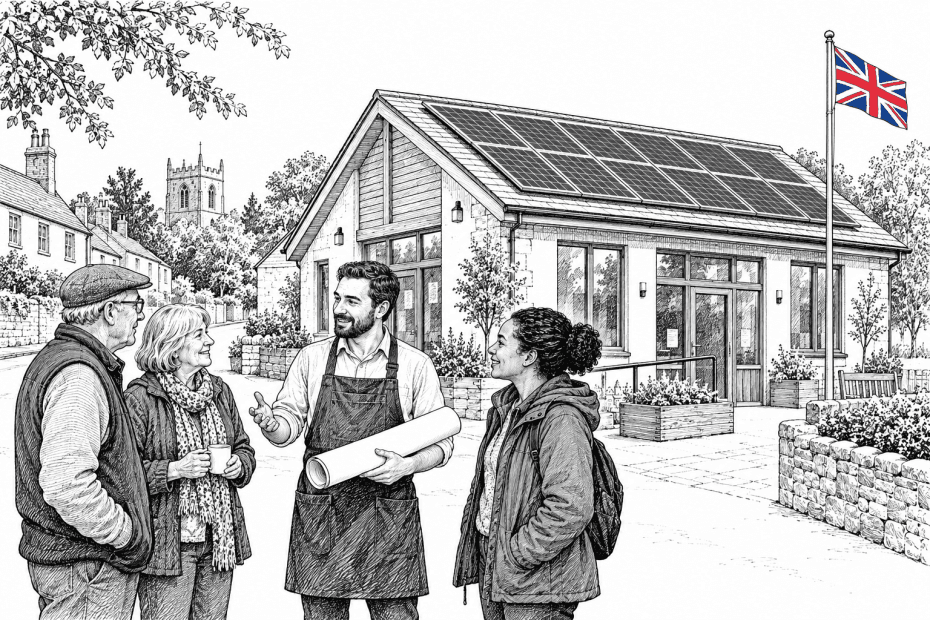
New community energy funding could create openings for small firms that install, maintain or host renewable equipment. For a business considering getting involved, the first question is who will own the project and how local people will benefit.
The government’s 17 September announcement launches a £30 million package through Great British Energy. It includes a £20 million Community Fund for England, Wales and Northern Ireland, a £5 million Partnerships Grant for English councils and community energy partners, and £1.8 million for Scotland’s existing CARES support programme.
Who the funding is for
The Community Fund supports community organisations developing clean energy assets. Projects must give the community a defined legal and financial interest, with a defined share of benefits retained locally. The announcement says applications have opened, but it is not a general offer to pay for any small company’s solar panels.
Further details about plans for community stakes in renewable projects are due this autumn. Businesses should distinguish those forthcoming arrangements from the funding announced today.
Work out your role before spending time on an application
A useful starting point is to decide whether you would be a supplier, a premises partner or part of a community organisation. Each role raises different questions. An installer needs a clear customer and specification; a building owner needs workable property arrangements; a community enterprise needs a credible ownership and benefit model.
Great British Energy’s Local Power Plan page invites contact from community organisations, public bodies and people developing local energy projects. Its expression of interest is optional and intended to help it understand the emerging project pipeline. Treat that engagement route as a conversation starter, rather than evidence that funding has been awarded.
Before commissioning detailed work, ask the programme team which current guidance applies to your organisation and location. Request confirmation of eligible costs, application deadlines, required permissions and whether expenditure made before approval can qualify. Keep a dated copy of the guidance used for your decision.
For installers and other small suppliers
Consider preparing a short capability sheet for prospective community customers: the work you can undertake, relevant qualifications, geographical coverage, maintenance provision and examples of completed projects. Ask potential buyers how they will select suppliers and when they expect to be ready to request quotations.
Separate an initial estimate from a firm quotation. A project still testing feasibility may not yet know its final design, grid connection arrangements or funding position. Spell out assumptions, quotation expiry dates and what would trigger a price review, so both sides understand the commitment.
Also discuss payment milestones and responsibility for delays. A promising local project can still tie up staff time or working capital. Avoid reserving scarce installation capacity solely on the strength of a funding announcement; establish what authorisation the customer can actually give.
For businesses offering a roof or site
If a community group approaches you about using your premises, ask who would own the equipment, who would receive the electricity or income, and who would pay for maintenance. Include access, insurance, roof repairs and the end of the arrangement in those early discussions.
For rented premises, involve the landlord before making commitments. Our earlier guide to assessing solar and energy resilience covers the practical questions behind any installation, including roof condition, finance and the time you expect to remain in the building.
Ask for a project-specific explanation of any proposed savings. Check the assumptions about consumption, generation and ongoing charges, and seek appropriate technical and legal advice before signing. Community involvement can be valuable, but the commercial arrangements still need to make sense for your business.
A sensible next step is a focused discussion with the local project lead or council: what is being proposed, which funding route fits, and what contribution could your firm realistically make? That gives you a basis for deciding how much time and money to commit.