Small poultry businesses in Lincolnshire have one less immediate restriction to manage after the government confirmed a local bird flu protection zone has ended near Market Rasen.
In its latest avian influenza update, Defra said that, following disease control activity and surveillance around a second premises near Market Rasen, West Lindsey, the 3km protection zone has ended. The area that formed it has now become part of the wider surveillance zone.
That is a narrow update, but it matters for small poultry keepers, egg producers, farm shops, local food suppliers and rural businesses that depend on clear operating rules. Bird flu controls can affect movements, staffing, customer communication, supply planning and confidence across a local supply chain.
What has changed?
The 8 May update relates to a second premises near Market Rasen, West Lindsey, Lincolnshire. The protection zone around that premises has ended after completion of the required disease control work and surveillance. The area has not simply returned to normal: it becomes part of the surveillance zone, so businesses still need to check the rules that apply to their exact location.
The wider picture also remains active. Government updates in April recorded confirmed highly pathogenic avian influenza H5N1 in commercial poultry near Gainsborough, West Lindsey, and near Great Shelford in South Cambridgeshire. Earlier in April, mandatory housing measures were lifted in England and Wales, but bird keepers in a protection zone or captive bird monitoring controlled zone still had to keep birds housed.
For SMEs, the key point is that rules can change locally and quickly. A business a few miles away may face different restrictions, particularly where a protection zone, surveillance zone or controlled zone is in place.
Why small firms should not treat this as “job done”
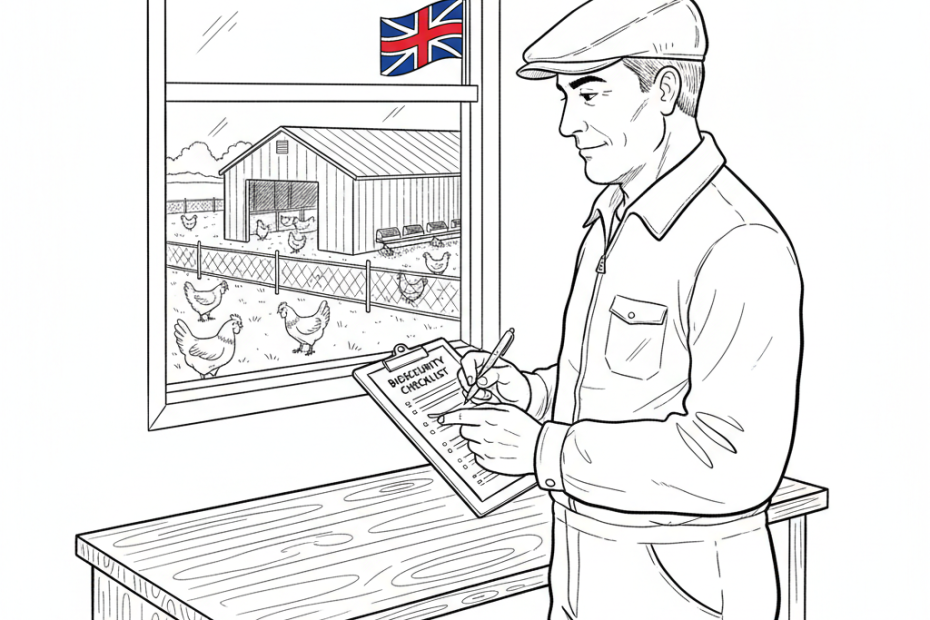
The easing of one protection zone is welcome, but it is not a reason to relax biosecurity. The government has continued to stress mandatory biosecurity measures, even where birds no longer have to be housed. For smaller operators, this is where the day-to-day details matter: footwear and clothing routines, visitor controls, vehicle movements, feed and bedding storage, pest control, cleaning records and clear responsibility among staff or family workers.
Those checks are not only about compliance. They protect trading continuity. A suspected case can create immediate disruption for movements, deliveries and customer confidence. Firms that supply cafés, butchers, farm shops or local markets may also need to explain what has changed without overreassuring customers or understating the ongoing rules.
Practical checks for poultry and rural SMEs
First, confirm your current zone status using official guidance rather than relying on local assumptions. If a protection zone has ended, check whether surveillance-zone rules still apply and whether any movement licences or records are required for your activities.
Second, update staff instructions. Even very small teams should know who handles visitors, what cleaning routine is expected, and what to do if birds appear unwell. Clear instructions reduce the risk of a rushed decision during a busy morning.
Third, review supplier and customer communication. If you have had disruption, tell regular customers what has changed and what remains in place. A short factual update can be better than silence, particularly for farm shops, hospitality buyers and local retailers who need confidence in continuity of supply.
Fourth, protect cash flow. Extra cleaning, cancelled movements, vet input, labour changes and stock disruption can all create costs before income catches up. Our earlier piece on late payments and SME cash flow is a useful reminder that working-capital discipline matters most when operations are interrupted.
Finally, keep records tidy. If rules change again, businesses with clear movement, visitor and cleaning records will be better placed to respond quickly and show what controls were followed.
The takeaway
For small poultry firms in and around affected areas, the latest Lincolnshire update is cautiously positive. It shows that controls can ease after disease control work and surveillance are completed. But the practical SME response should be careful rather than complacent.
Check your exact zone, maintain biosecurity, brief staff, keep customers informed and plan for possible disruption. Bird flu controls are local, technical and fast-moving; the firms most likely to cope well are those that keep the operational basics up to date before the next change arrives.