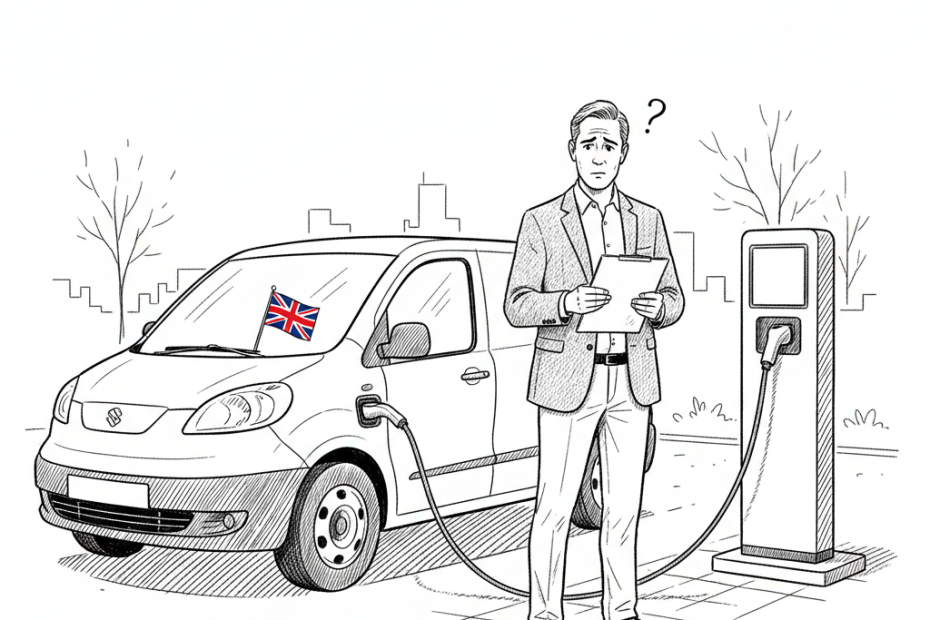
HMRC has confirmed that its current position on VAT for electricity supplied at public electric vehicle charge points has not changed, despite a recent First-tier Tribunal decision involving Charge My Street Limited. For small firms already using electric vans, company cars or pool vehicles, the message is simple: do not assume public charging costs are about to become cheaper for VAT purposes.
The Revenue and Customs Brief, published on 12 May 2026, says electricity supplied at public charge points remains standard-rated for VAT. HMRC has applied for permission to appeal the tribunal decision, which found in favour of Charge My Street Limited and considered when the reduced rate for supplies of fuel and power could apply.
That may sound technical, but it matters for SMEs because vehicle running costs are already a live budgeting issue. A small change in how charging is taxed can affect delivery margins, field-service costs, staff reimbursement policies and the business case for moving more vehicles to electric.
What HMRC has said
Fuel and power supplied to domestic premises can qualify for the reduced VAT rate of 5%. HMRC’s long-standing view is that public electric vehicle charge points do not qualify as domestic premises, so electricity supplied at those locations is subject to the standard rate of VAT.
The tribunal case looked at the rules in Schedule 7A to the VAT Act 1994. According to HMRC’s brief, the First-tier Tribunal concluded that supplies of electricity to an identified person at identifiable premises may fall within the relevant reduced-rate provision if the total supplied does not exceed 1,000 kWh in a calendar month. The tribunal also said the premises do not have to be owned or controlled by the person receiving the supply, and do not have to be buildings, meaning locations such as public car parks may be included.
However, HMRC has applied for permission to appeal. Until that is resolved, its published policy remains that public EV charging is standard-rated.
Why this matters for small firms
For a sole trader who charges mainly at home, the immediate impact may be limited. But many SMEs rely on public chargers during the working day: couriers, tradespeople, mobile engineers, sales teams, cleaners, care providers, catering firms and regional service businesses can all face public charging costs when vehicles are away from base.
If a business has priced jobs or staff mileage policies on the expectation that public charging VAT might fall, this brief is a useful warning not to build that into forecasts yet. The position is still contested, but the operational rule for now is to treat public charging as standard-rated unless and until HMRC changes its policy or the appeal process produces a settled outcome.
There is also a cash-flow point. VAT-registered firms may be able to recover input tax where the normal rules are met, but the timing, evidence and business-use split still need to be handled properly. Non-VAT-registered firms, and businesses with mixed private and business use, may feel the cost more directly.
What SMEs should check now
First, review how public charging costs are being recorded. Receipts, app invoices and charging-network statements should be kept clearly enough to support VAT accounting and business-use records. If staff use their own accounts or cards, make sure the reimbursement process does not leave the business short of evidence.
Second, check the assumptions behind electric fleet budgets. Public charging can be more expensive than depot or home charging even before tax treatment is considered. If a team regularly charges away from base, the standard-rate position should be reflected in job costing, route planning and vehicle replacement decisions.
Third, look at whether more charging can be moved to predictable locations. That could mean workplace charging, better route planning, or clearer guidance for drivers on when to use public rapid chargers. For van-heavy firms, this sits alongside wider running-cost pressures such as fuel, insurance and maintenance; our recent piece on fuel duty uncertainty is another reminder that transport costs can quickly squeeze margins.
Fourth, speak to an accountant or VAT adviser before changing treatment. This is especially important for businesses with company cars, employee reimbursement, partial exemption, mixed-use vehicles or a blend of home, workplace and public charging.
The practical takeaway
The tribunal decision is worth watching, but it has not changed HMRC’s stated policy for now. Small firms should continue to budget for public EV charging as standard-rated, keep clean charging records and avoid making pricing or fleet decisions based on a possible VAT reduction that may not arrive.
For SMEs already trying to control vehicle costs, the safest response is not to wait for the tax argument to settle. Check the paperwork, model the real cost of public charging, and make sure staff reimbursement rules are clear before small gaps become expensive habits.
Sources
- HMRC, Revenue and Customs Brief 4 (2026): VAT liability of supplies of electricity from public electric vehicle charge points, published 12 May 2026
- HMRC, VAT liability of supplies of electricity from public electric vehicle charge points, published 12 May 2026