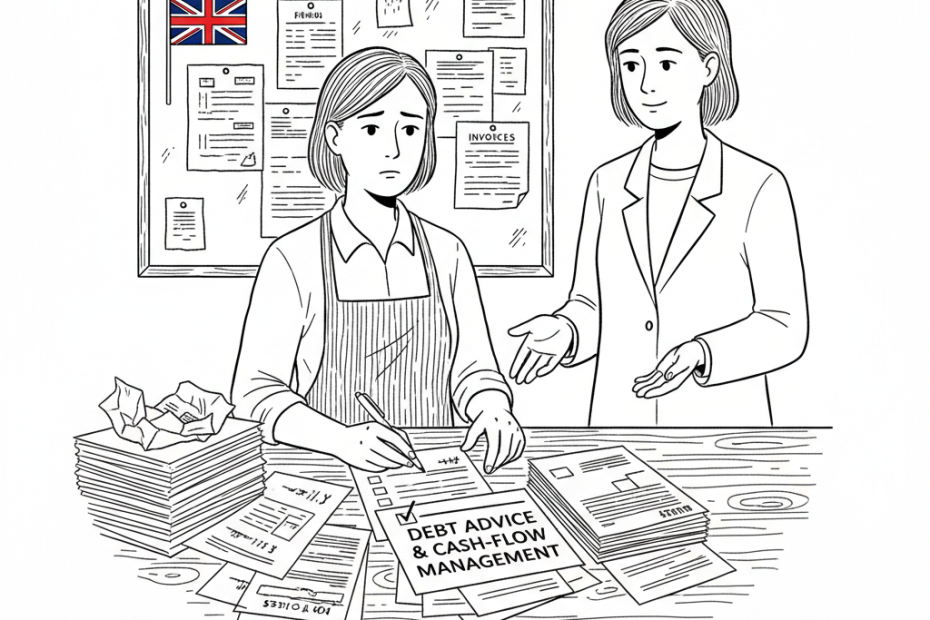
The government has announced a £4 million funding boost for small business debt advice, with the support being delivered through the Money and Pensions Service.
For small firms, the announcement matters less as a headline grant figure and more as a reminder that business debt problems are rarely just one overdue bill. Tax arrears, supplier balances, rent, loan repayments, personal guarantees and late customer payments can quickly overlap. By the time an owner is juggling all of them at once, even a profitable business can feel short of options.
The new funding is aimed at strengthening access to advice for businesses that are already struggling with their finances. It sits alongside wider government work on payment culture and small business resilience, including recent legislation aimed at tackling late payments. BritishSME has covered that separate issue in its recent piece on the Late payment Bill and what small suppliers should check now.
Why this matters for small firms
Debt pressure in a small business is often personal as well as commercial. A sole trader or owner-manager may be dealing with business invoices, household costs and tax deadlines at the same time. That can make it tempting to delay calls, agree unaffordable instalments or rely on short-term borrowing without a clear repayment plan.
Better access to debt advice can help owners understand which debts are most urgent, what can be negotiated, and what information creditors are likely to need. It can also help directors and sole traders avoid mixing up business cash flow problems with personal affordability decisions.
The practical benefit is early triage. A business that seeks help while it still has records, forecasts and some room to negotiate is in a stronger position than one that waits until enforcement action, account holds or supplier stoppages have already begun.
What owners should check first
Any small firm under pressure should start with a clear list of what is owed, to whom, by when and on what terms. That includes HMRC balances, rent, utilities, trade suppliers, finance agreements, credit cards, overdrafts and any loans backed by personal guarantees.
The next step is to separate urgent risks from general pressure. Payroll, tax deadlines, essential suppliers, premises costs and regulated finance commitments may need different handling from ordinary trade creditors. Owners should avoid making promises to one creditor that leave the business unable to meet a higher-priority obligation days later.
Cash-flow forecasts also need to be honest. A repayment plan that works only if every customer pays early is unlikely to survive. Firms should stress-test expected receipts, include tax and wage commitments, and account for seasonal dips before agreeing instalments.
Where late payment fits in
Many small businesses do not fall into debt because sales have disappeared. They fall into difficulty because cash arrives too slowly. Long payment terms, disputed invoices and large customers paying late can turn healthy order books into arrears elsewhere.
That makes credit control part of debt prevention. Small firms should tighten invoice wording, send reminders before due dates, keep evidence of delivery and challenge repeated late payment patterns quickly. If a customer is regularly paying late, owners need to decide whether the margin is worth the working-capital strain.
The government’s debt advice announcement will not remove that pressure on its own. But it should make it easier for struggling owners to find structured help before problems spiral.
The takeaway
Small business owners should treat the new funding as a nudge to seek advice earlier, not as a last-resort measure. If arrears are building, the immediate job is to get a full debt picture, understand priority risks, and speak to qualified support before agreeing repayment terms that the business cannot sustain.
For firms that are not yet in difficulty, the same lesson still applies: keep cash-flow forecasts current, monitor late payers closely, and know where to get debt advice before the need becomes urgent.
Source: GOV.UK announcement on strengthened small business debt advice.